
As women continue to break barriers in the business world, many are seeking career paths that offer both stability and growth—without the need for a four-year degree.
Recent research from Resume Now, leveraging U.S. Bureau of Labor Statistics data, highlights 13 dynamic careers that pay $50,000 or more annually, require only a high school diploma, and are projected to remain resilient despite AI-driven automation.
Key Takeaways
- AI-resistant careers are jobs that are harder for artificial intelligence to replace because they require human judgment, emotional intelligence, adaptability, hands-on problem-solving, leadership, or direct interaction with people.
- Careers such as flight attendant, lodging manager, electrician, insurance sales agent, hearing aid specialist, and industrial machinery mechanic remain valuable because they depend on skills that AI cannot easily duplicate.
- The best AI-resistant careers for women often combine technical ability with communication, customer service, safety awareness, creativity, or relationship-building.
- For women entering the workforce, returning after a break, or considering a career change, AI-resistant jobs can provide an accessible path to financial independence, advancement, and long-term opportunity.
What are AI-Resistant Careers?
AI-resistant careers are jobs that are harder for artificial intelligence to replace because they rely on human judgment, emotional intelligence, adaptability, physical skill, leadership, creativity, or real-time problem-solving.
While AI can automate repetitive and data-driven tasks, it is less effective in roles that require human interaction, hands-on work, safety decisions, personalized service, or complex problem-solving in unpredictable environments.
Why AI-Resistant Careers Matter for Women Without a College Degree
Automation and artificial intelligence are transforming industries, but jobs that demand human connection, creative problem-solving, and adaptability remain in high demand. For women looking to build a rewarding career or pivot into a new field, these roles offer a clear path to financial independence and professional growth—without the burden of student debt.
According to a 2024 McKinsey report, women are more likely to be employed in roles that require social and emotional skills—areas where AI still falls short. This makes many of these careers particularly well-suited for women seeking long-term job security.
Methodology: How These AI-Resistant Careers Were Selected
The careers in this article were selected based on four criteria: a typical entry-level education requirement of a high school diploma, median annual pay of at least $50,000, projected job growth, and lower risk of AI replacement due to the need for human judgment, hands-on work, interpersonal communication, or adaptability.
13 High-Paying AI-Resistant Careers for Women Without a College Degree
| Career | Median Salary | Growth Outlook | Why AI-Resistant? |
|---|---|---|---|
| Forest Fire Inspectors & Prevention Specialists | $71,420 | Much faster than average | Requires on-the-ground judgment and coordination |
| Flight Attendants | $68,370 | Faster than average | Relies on emotional intelligence, safety, and adaptability |
| Lodging Managers | $65,360 | Faster than average | Demands leadership and guest relations |
| Electricians | $61,590 | Faster than average | Involves troubleshooting and hands-on skills |
| Plumbers, Pipefitters, Steamfitters | $61,550 | Faster than average | Custom solutions in unpredictable settings |
| Industrial Machinery Mechanics | $61,170 | Much faster than average | Real-time problem-solving and repairs |
| Chefs and Head Cooks | $58,920 | Faster than average | Creativity and leadership in the kitchen |
| Hearing Aid Specialists | $58,670 | Much faster than average | Personalized patient care and adjustments |
| Personal Service Managers | $57,570 | Faster than average | Team management and customer service |
| Maintenance Workers, Machinery | $61,170 | Faster than average | Complex repairs require human expertise |
| Insurance Sales Agents | $59,080 | Faster than average | Relationship-building and tailored advice |
| Aircraft Cargo Handling Supervisors | $58,920 | Faster than average | Logistics management and safety oversight |
| Security & Fire Alarm Systems Installers | $56,430 | Faster than average | Installation and troubleshooting skills |

A Closer Look at AI-Resistant Careers That Don’t Require a College Degree
The careers in the table above are very different from one another, but they have something important in common. They depend on human skills that AI can’t easily replace. Many require judgment, communication, physical skill, customer service, safety awareness, leadership, or the ability to solve problems in unpredictable real-world situations.
Here’s a closer look at why each career can be a strong option for women who want a high-paying, AI-resistant job without earning a four-year degree.
Forest Fire Inspectors and Prevention Specialists
Forest fire inspectors and prevention specialists help protect people, land, property, and communities by identifying fire risks and supporting fire prevention efforts. This work can include inspecting forested areas, investigating fire hazards, educating the public, and helping enforce fire safety rules.
This career is AI-resistant because it requires fieldwork, judgment, environmental awareness, and quick decision-making in changing conditions. AI can support forecasting and data analysis, but it can’t fully replace the experience and human judgment needed to assess real-world fire risks.
For women interested in public safety, environmental protection, emergency management, or outdoor work, this career can offer a meaningful path that doesn’t require a traditional college degree.
Flight Attendants
Flight attendants do much more than serve drinks and snacks. They’re responsible for passenger safety, emergency procedures, customer service, conflict management, and helping travelers feel comfortable during flights.
This career is AI-resistant because it relies heavily on emotional intelligence, communication, adaptability, and calm decision-making under pressure. When passengers are anxious, upset, confused, sick, or facing an emergency, they need a trained person who can respond with empathy.
For women who enjoy travel, customer-facing work, and fast-paced environments, becoming a flight attendant can be a strong career option with advancement opportunities over time.
Lodging Managers
Lodging managers oversee hotels, resorts, inns, and other hospitality properties. Their responsibilities can include supervising employees, managing guest experiences, handling complaints, monitoring operations, coordinating services, and ensuring the property runs smoothly.
This role is difficult for AI to replace because hospitality depends on people. Guests expect personal service, quick problem-solving, and thoughtful responses when something goes wrong. A lodging manager has to balance business goals with staff needs and customer satisfaction.
For women with strong communication, leadership, and organizational skills, lodging management can be a practical career path with opportunities to move into higher-level hospitality roles.
Electricians
Electricians install, maintain, and repair electrical systems in homes, businesses, factories, and other buildings. They read technical diagrams, troubleshoot problems, follow safety codes, and work with tools and equipment in a variety of settings.
This is one of the clearest examples of an AI-resistant career because it requires hands-on technical skill in real-world environments. Every job site is different, and electricians must use judgment, physical skill, safety knowledge, and problem-solving ability.
For women interested in skilled trades, electrical work can offer strong earning potential, apprenticeship pathways, and the possibility of self-employment or business ownership in the future.
Plumbers, Pipefitters, and Steamfitters
Plumbers, pipefitters, and steamfitters install and repair systems that move water, gas, steam, and other materials. Their work can include reading blueprints, diagnosing problems, replacing parts, maintaining systems, and responding to urgent repair needs.
This career is AI-resistant because the work is physical, technical, and highly situational. AI might help with scheduling, diagnostics, or training, but it can’t crawl into a tight space, repair a pipe, interpret an unusual job site, or communicate with a stressed customer.
For women who want practical training, strong income potential, and work that’s always needed, plumbing and related trades can be smart alternatives to office-based career paths.
Industrial Machinery Mechanics, Machinery Maintenance Workers, and Millwrights
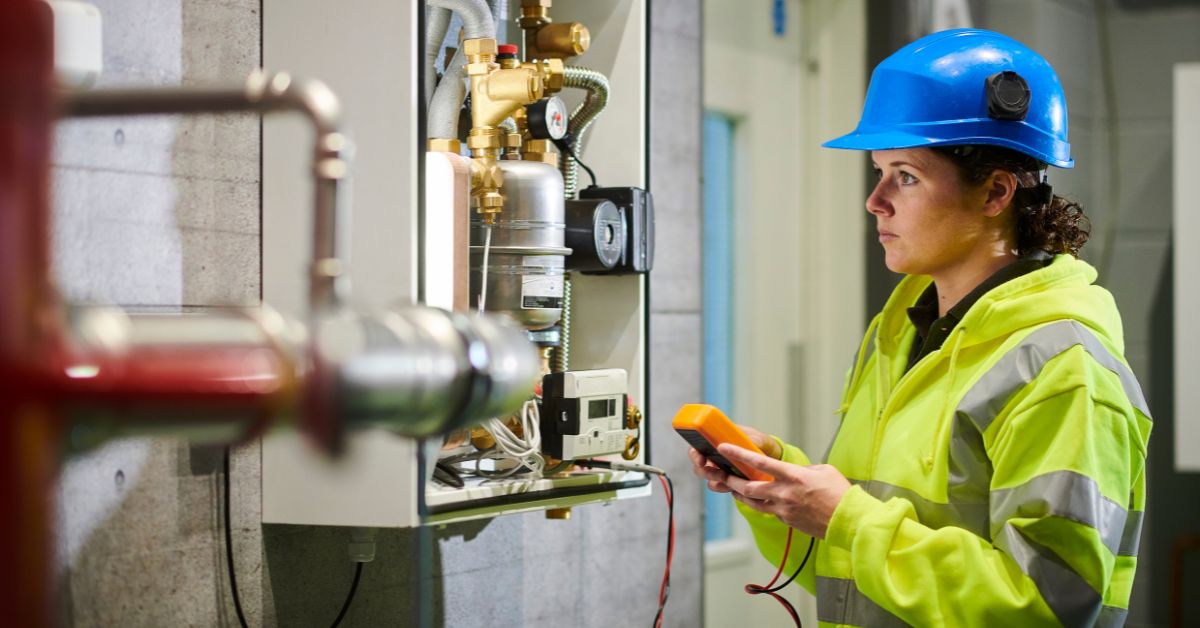
Industrial machinery mechanics and related workers keep machines, equipment, and production systems operating. They inspect equipment, identify mechanical problems, repair parts, perform maintenance, and help prevent costly breakdowns.
This career is AI-resistant because it combines technical knowledge with hands-on troubleshooting. Machines don’t always fail in predictable ways, and workers often need to diagnose problems quickly based on sounds, movement, performance changes, and experience.
For women interested in manufacturing, operations, engineering-adjacent work, or technical problem-solving, this career can provide a path into industries that depend on skilled maintenance workers.
Chefs and Head Cooks
Chefs and head cooks prepare food, manage kitchens, plan menus, supervise staff, order supplies, and ensure meals meet quality and safety standards. The work blends creativity, leadership, timing, taste, and operations.
This career is AI-resistant because food service depends on sensory judgment, creativity, team leadership, and real-time decision-making. AI can suggest recipes or help manage inventory, but it can’t fully replace the experience of leading a kitchen, adjusting flavors, motivating staff, and responding to customer expectations.
For women who love food, hospitality, creativity, or entrepreneurship, this career can also open doors to catering, consulting, private chef services, food businesses, or restaurant ownership.
Hearing Aid Specialists
Hearing aid specialists help people with hearing challenges by testing hearing, fitting hearing aids, adjusting devices, and supporting customers as they adapt to using them. The role combines technical knowledge with patient care and communication.
This career is AI-resistant because it requires trust, empathy, listening, education, and personalized support. Hearing loss can be emotional and frustrating, so people often need reassurance and guidance from a real person, not just a device or software tool.
For women who are interested in healthcare support roles but don’t want to pursue a four-year degree, hearing aid specialist work may offer a strong people-focused career path.
Personal Service Managers
Personal service managers oversee teams and operations in service-based businesses. Depending on the industry, they may manage staff, coordinate customer experiences, handle scheduling, resolve problems, and ensure services are delivered consistently.
This career is AI-resistant because service businesses rely on people managing people. AI can help with appointments, reminders, and customer data, but it can’t fully replace leadership, judgment, conflict resolution, and relationship-building.
For women with strong interpersonal and organizational skills, personal service management can offer opportunities to advance into leadership or eventually start a service-based business.
General Maintenance and Repair Workers
General maintenance and repair workers fix and maintain buildings, equipment, and systems. Their work can include basic electrical, plumbing, carpentry, painting, mechanical repair, and troubleshooting tasks.
This career is AI-resistant because maintenance work happens in physical spaces where problems vary from one situation to the next. Workers need practical knowledge, tool skills, judgment, and the ability to figure out what’s wrong when the answer isn’t obvious.
For women who like variety, independence, and hands-on work, maintenance and repair can be a flexible career path with steady demand across many industries.
Insurance Sales Agents
Insurance sales agents help individuals and businesses choose insurance policies that fit their needs. They explain options, build relationships, answer questions, follow up with clients, and often help people make decisions about financial protection.
This career is AI-resistant because trust matters. AI can compare policies or provide basic information, but many customers still want a person who can explain trade-offs, understand their situation, and help them feel confident in their decisions.
For women with strong communication, persuasion, and relationship-building skills, insurance sales can offer income growth, flexibility, and potential entrepreneurial opportunities.
Aircraft Cargo Handling Supervisors
Aircraft cargo handling supervisors oversee the workers and processes involved in loading, unloading, and moving cargo for air transportation. This can include coordinating schedules, monitoring safety, managing teams, and making sure cargo is handled properly.
This career is AI-resistant because it requires real-time coordination, safety judgment, leadership, and problem-solving in a fast-moving environment. AI can assist with logistics, but people are still needed to manage teams, respond to delays, handle exceptions, and keep operations moving safely.
For women interested in transportation, logistics, aviation, or operations, this role can provide a path into an industry where coordination and leadership skills are highly valuable.
Security and Fire Alarm Systems Installers
Security and fire alarm systems installers set up, maintain, and repair alarm systems in homes, businesses, schools, and other buildings. The work can include wiring, testing systems, explaining equipment to customers, and making sure systems meet safety requirements.
This career is AI-resistant because installation and repair require hands-on skill, technical troubleshooting, customer communication, and site-specific decisions. Every building is different, and workers must adapt to the space, the system, and the customer’s needs.
For women who are interested in technology but don’t want a desk-only job, alarm system installation can offer a practical blend of technical work, problem-solving, and customer service.
What Makes These Careers Stand Out for Women?
- Leadership Opportunities: Roles like lodging managers and personal service managers offer a direct path to supervisory and management positions, where women can leverage their organizational and people skills.
- Human-Centered Work: Many of these careers—such as hearing aid specialists, flight attendants, and insurance agents—thrive on empathy, communication, and relationship-building, areas where women have historically excelled.
- Flexibility and Growth: Fields like hospitality, skilled trades, and healthcare provide opportunities for advancement, entrepreneurship, and specialization. For example, women-owned businesses in hospitality and personal services have grown by over 20% in the last five years, according to the National Association of Women Business Owners.
- Accessible Entry Points: These roles allow women to start earning a strong income immediately after high school or at anytime in their careers without a college degree, with on-the-job training and apprenticeships often available. This is especially valuable for those balancing family or financial commitments.
Skills That Make Careers More AI-Resistant
The most AI-resistant careers aren’t necessarily the jobs with the most technology. They’re the jobs that depend on human abilities that are difficult to automate, especially when people must make decisions, respond to unpredictable situations, solve problems in real time, or build trust with others.
As AI becomes more common in the workplace, women can strengthen their long-term career opportunities by developing skills that complement technology rather than compete with it. The following skills are especially important in careers that are harder for AI to replace.
Human Judgment
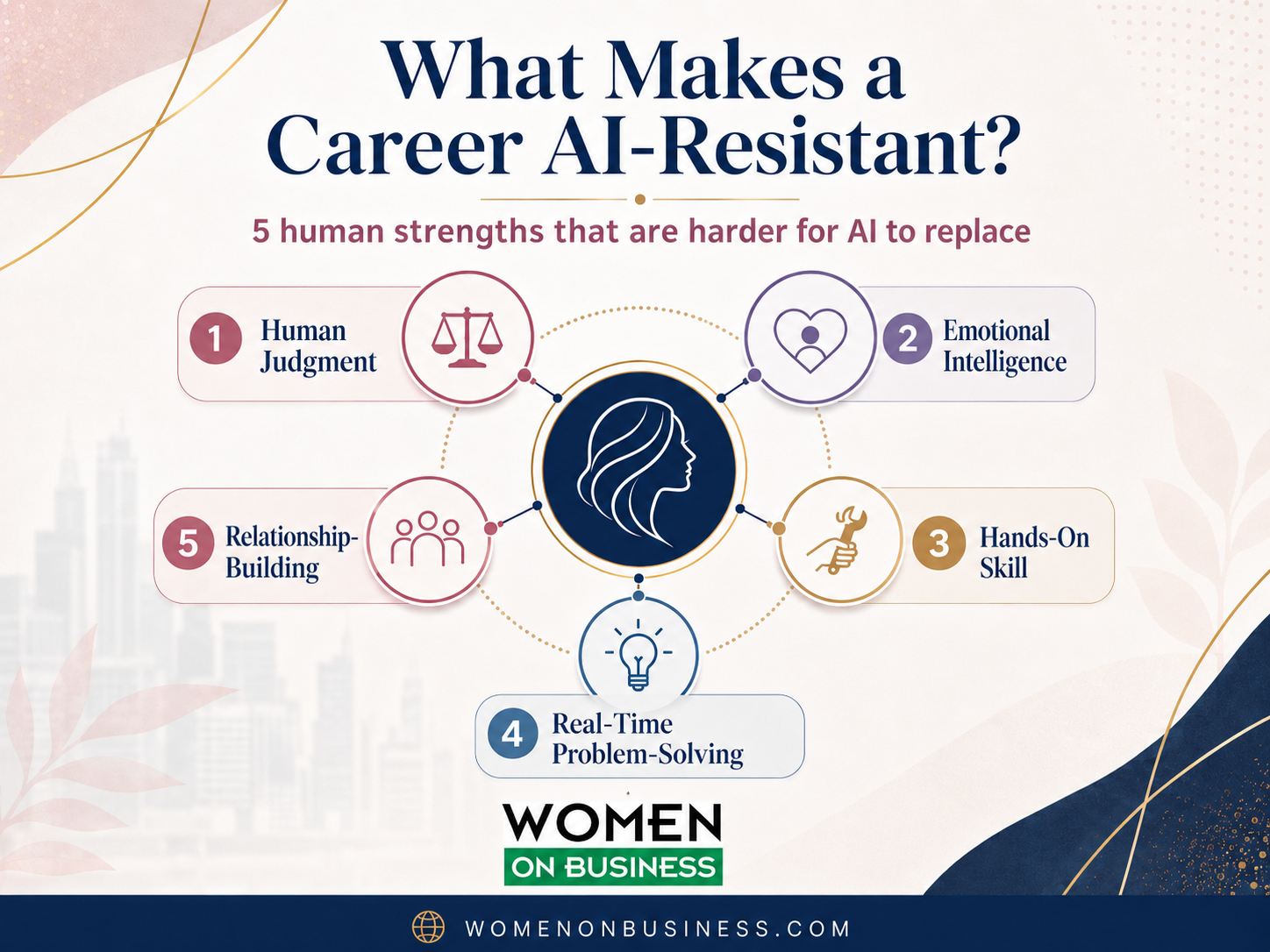
AI can analyze data, identify patterns, and make recommendations, but it can’t fully understand context the way people can. Many careers require workers to evaluate risks, weigh options, consider human needs, and make decisions when there is no perfect answer. Jobs that involve safety, compliance, supervision, customer care, or problem-solving often depend on judgment that comes from experience.
Emotional Intelligence
Careers that require empathy, patience, persuasion, conflict resolution, or personal support are more difficult to automate. Whether someone is helping a customer, leading a team, calming a stressful situation, or building a long-term client relationship, emotional intelligence remains a powerful human advantage.
Hands-On Technical Skill
Many AI-resistant careers involve physical work in real-world environments. Electricians, plumbers, machinery mechanics, installers, chefs, and other hands-on professionals must assess each situation, use tools properly, adapt to changing conditions, and solve problems that are not always predictable. AI may support these jobs, but it can’t easily replace the skilled human performing the work.
Real-Time Problem-Solving
AI works best when it has clear inputs, reliable data, and predictable patterns. Many jobs are messier than that. Workers often need to make quick decisions, adjust plans, troubleshoot unexpected issues, and communicate with others at the same time. Careers that require fast, flexible problem-solving are more likely to remain valuable as technology evolves.
Communication
Strong communication skills are essential in many AI-resistant careers. Workers need to explain options, ask the right questions, give instructions, listen carefully, and make people feel understood. This is especially important in roles that involve customers, patients, clients, guests, employees, or vendors.
Leadership
Leadership isn’t just about managing tasks. It requires motivating people, resolving disagreements, setting priorities, making judgment calls, and creating trust. AI can help leaders with information and productivity, but people still look to other people for guidance, accountability, and confidence.
Relationship-Building
Many high-value careers depend on trust. Sales professionals, managers, service providers, hospitality workers, and business owners often succeed because they know how to build relationships over time. AI can assist with follow-up, reminders, and research, but genuine relationship-building still depends on human connection.
Adaptability
The future of work will continue to change, and adaptability may be one of the most important career skills of all. Women who are willing to learn new tools, update their skills, move into growing industries, and combine human strengths with technology will be better positioned for long-term success.
The best strategy is not to avoid AI completely. Instead, focus on careers where AI can be used as a tool while human skills remain central to the work. Jobs that combine technical ability, communication, judgment, empathy, and adaptability are more likely to offer durable opportunities in an AI-driven economy.
Who Should Consider an AI-Resistant Career Without a College Degree?
AI-resistant careers can be a smart option for women who want a practical path to stable income, career growth, and long-term opportunity without taking on the time or cost of a four-year college degree. These jobs are especially valuable because many of them rely on human strengths that remain important even as technology changes the workplace.
Women who are just starting their careers may want to consider AI-resistant jobs because many of these roles offer entry points through on-the-job training, apprenticeships, certifications, or employer-provided training programs. Rather than assuming college is the only path to a good career, high school graduates can explore occupations that combine strong earning potential with skills AI can’t easily replace.
These careers may also be a good fit for women who are returning to the workforce after caregiving, raising children, relocating, or taking a career break. Jobs that value communication, reliability, judgment, problem-solving, customer service, and hands-on ability can create opportunities to rebuild income and confidence without starting over in a traditional degree program.
Women considering a career change should also pay close attention to AI-resistant careers. As automation reshapes some office, administrative, and repetitive knowledge-work roles, switching into a field that requires human interaction, physical skill, leadership, or real-time decision-making can provide more durable opportunities.
AI-resistant careers without a college degree may be especially appealing to women who want to avoid student loan debt, enter the workforce faster, or pursue a career that offers advancement through experience rather than formal education alone. Many of these roles also create pathways into management, business ownership, consulting, sales, training, or entrepreneurship over time.
These career paths can be a strong fit for women who:
- Want a high-paying job without earning a four-year college degree
- Prefer hands-on, people-focused, or service-oriented work
- Are interested in skilled trades, hospitality, healthcare support, transportation, sales, or maintenance roles
- Want a career that uses judgment, empathy, communication, and adaptability
- Are returning to work after a break
- Are changing careers because of automation, burnout, or limited advancement
- Want to build practical skills that can lead to higher pay or self-employment
The best AI-resistant career will depend on your strengths, interests, lifestyle, and long-term goals. However, the common thread is clear. Careers that combine human skills with practical expertise are more likely to remain valuable as AI becomes a larger part of the workplace.

Why These Careers Are Hard for AI to Replace
While AI continues to automate repetitive or data-driven tasks, it struggles with jobs that require:
- Real-time decision-making in unpredictable environments (e.g., emergency response, machinery repair)
- Emotional intelligence and nuanced communication (e.g., customer service, healthcare)
- Creative problem-solving and adaptability (e.g., culinary arts, event management)
A 2023 World Economic Forum study found that 85% of employers still value human skills—like collaboration, creativity, and leadership—over technical skills alone.
FAQs about AI-resistant Careers for Women without College Degrees
What are AI-resistant careers?
AI-resistant careers are jobs that are less likely to be replaced by artificial intelligence because they require human skills such as judgment, empathy, creativity, leadership, adaptability, physical work, or problem-solving in unpredictable situations.
What are the best AI-resistant careers for women without a college degree?
Some of the best AI-resistant careers for women without a college degree include flight attendant, lodging manager, electrician, plumber, industrial machinery mechanic, chef or head cook, hearing aid specialist, insurance sales agent, and security or fire alarm systems installer. These jobs can offer strong pay, growth potential, and work that depends heavily on human skills.
Why are some jobs harder for AI to replace?
Some jobs are harder for AI to replace because they involve real-time decision-making, emotional intelligence, customer relationships, physical tasks, safety responsibilities, leadership, or creative problem-solving. AI can automate repetitive work, but it struggles in roles that require human connection and adaptability.
How can women prepare for an AI-resistant career?
Women can prepare for an AI-resistant career by identifying roles that match their strengths, researching training or certification requirements, pursuing apprenticeships or on-the-job training, building communication and leadership skills, and choosing careers that require human judgment, technical ability, or direct service.
Do AI-resistant jobs still require technology skills?
Many AI-resistant jobs benefit from technology skills, even if they are not fully tech-based roles. Learning how to use digital tools, scheduling platforms, diagnostic equipment, customer relationship management systems, or AI-powered tools can help women stay competitive and advance in their careers.
Takeaway for Women in Business
Whether you’re just starting out, returning to the workforce, or seeking a career change, these 13 AI-resistant careers offer a blend of strong pay, job security, and growth potential—without requiring a college degree. They also align with the strengths women bring to the workplace: leadership, empathy, adaptability, and a commitment to excellence.
If you’re ready to invest in your future and want a role where your skills can’t be easily replaced by a machine, consider exploring these high-opportunity paths. Your next chapter in business could be more accessible—and rewarding—than you think.
Sources and External References
The career data in this article was informed by Resume Now’s analysis of fast-growing, higher-paying, AI-resistant careers for workers with a high school diploma, along with occupational data from the U.S. Bureau of Labor Statistics Occupational Outlook Handbook. Additional workforce context was informed by research from the World Economic Forum and McKinsey & Company about AI, automation, skills, and the future of work.
- Resume Now, “Top Careers for High School Graduates That Are Fast-Growing, Higher Paying, and AI-Resistant”
- U.S. Bureau of Labor Statistics, Occupational Outlook Handbook
- World Economic Forum, “The Future of Jobs Report 2025: Skills Outlook”
- World Economic Forum, “Future of Jobs Report 2025: The jobs of the future and the skills you need to get them”
- McKinsey Global Institute, “Generative AI and the future of work in America”