
Artificial intelligence is creating new opportunities to make money, and you don’t have to be a programmer or technology expert to take advantage of them. In fact, some of the most practical AI side hustles build on skills you’ve already developed through your career, education, or personal experience.
If you’re a strong writer, you can use AI tools to expand your freelance services. If you’re organized and enjoy solving problems, you could help businesses automate repetitive tasks. Experience in marketing, design, customer service, or data analysis could also become the foundation for an AI-assisted business.
Companies are already hiring people who know how to apply AI to real business needs. According to Upwork’s In-Demand Skills report, demand for skills explicitly involving AI grew 109% year over year on its platform.
However, demand for traditional professional skills remained strong, too. The opportunity is in combining both. Let’s look at 13 AI side hustles you can start, the services you could sell, and how to turn your existing skills into additional income.
Key Takeaways
- You don’t need advanced technical skills to start many AI side hustles. Writing, marketing, administrative, creative, and business experience can provide a valuable foundation.
- Businesses pay for results. Using AI to complete work faster can help you earn money, but customers still expect accuracy, quality, and professional expertise.
- AI-assisted services offer different ways to earn income. Depending on your skills, you could sell writing services, marketing materials, data analysis, business automation, or training.
- You can create reusable AI workflows without building AI agents. No-code tools like Make and Zapier let you develop automations that can be customized for multiple clients.
- Start with one specific service. Choose a target customer, develop a few samples, and offer a clearly defined solution before expanding your business.
What Are AI Side Hustles?
AI side hustles use artificial intelligence to help complete tasks, create content, analyze information, or automate processes. They allow you to earn additional income by applying AI tools to work that individuals or businesses are willing to pay for.
For example, a freelance writer might use AI to organize research and develop outlines, while a business consultant might use AI-powered automation to reduce the time employees spend processing customer inquiries.
Some AI side hustles involve one-time projects. Others can lead to ongoing contracts, monthly retainers, or reusable products and services. The best opportunity for you will depend on what you know, what you enjoy doing, and how much time you’re willing to invest in learning new tools.
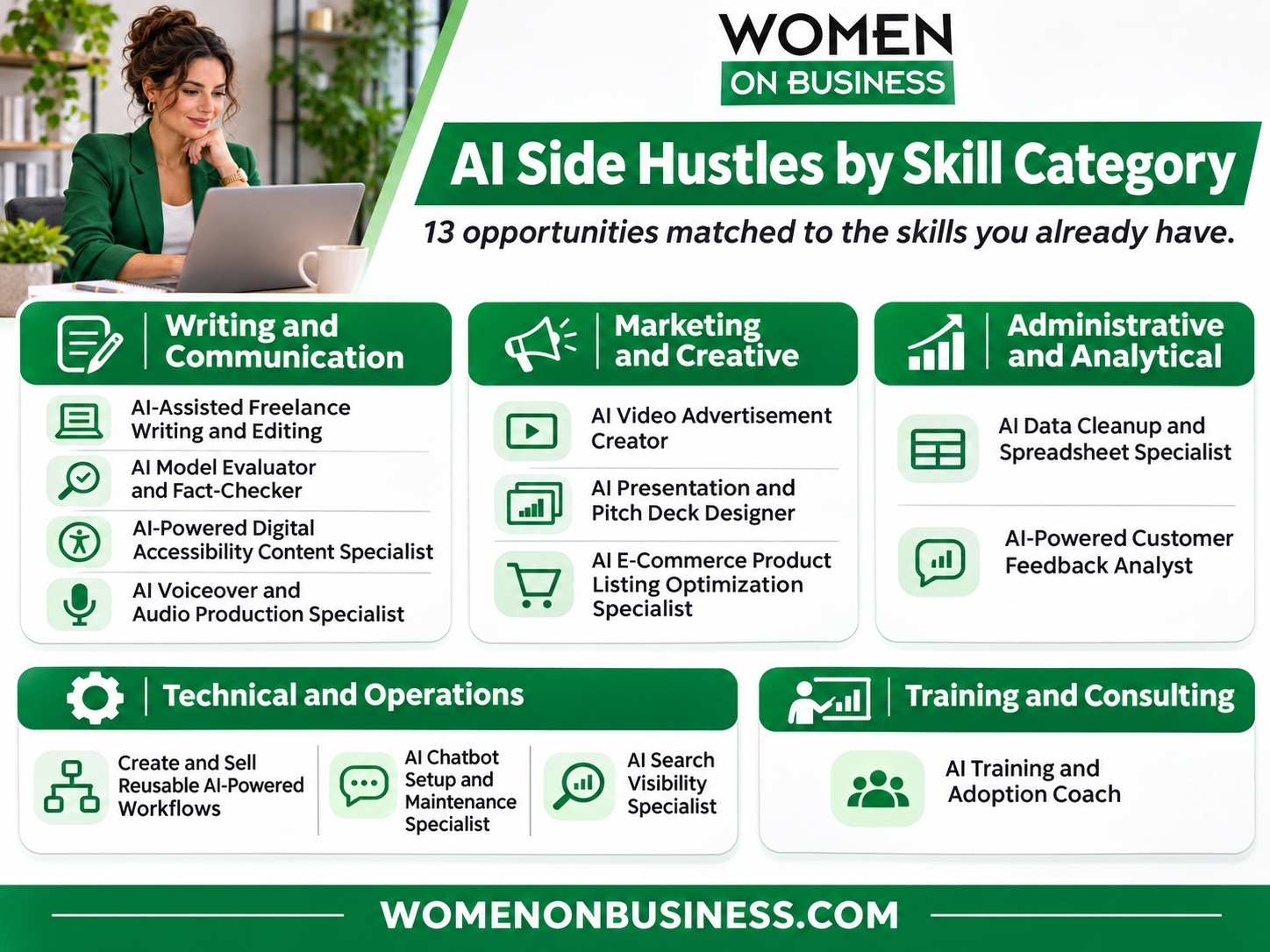
13 AI Side Hustles You Can Start
The following opportunities range from beginner-friendly freelance services to more specialized businesses that require additional training.
1. AI-Assisted Freelance Writing and Editing
This seems like the most obvious place to start. If you already have strong writing skills, AI can help you expand your freelance services and complete some projects more efficiently.
Businesses need articles, website copy, email newsletters, product descriptions, case studies, and other written materials. You can use tools like ChatGPT and Claude to brainstorm ideas, organize research, develop outlines, and identify opportunities to improve drafts.
However, producing high-quality content still requires human expertise. AI can generate convincing information that’s inaccurate, overlook important context, and produce generic writing that doesn’t connect with readers.
Your ability to conduct research, interview subject-matter experts, understand an audience, and communicate ideas clearly is a big part of what clients are willing to pay for.
You could also specialize in editing AI-generated content, fact-checking articles, updating outdated website pages, or improving content for search engines.
- Skills You Can Use: Writing, editing, research, marketing, SEO, and industry expertise.
- Potential Customers: Small businesses, marketing agencies, online publishers, consultants, and software companies.
- How to Get Started: Choose a writing specialty and create two or three portfolio samples. Offer a specific service, such as monthly blog writing, website copy updates, or editing AI-generated content.
The more specialized your expertise, the easier it may be to differentiate your services from inexpensive AI-generated writing.
2. Create and Sell Reusable AI-Powered Workflows
This is one of the more interesting AI business opportunities because you can develop a solution once and adapt it for multiple clients.
Businesses spend countless hours copying information between applications, organizing customer inquiries, updating spreadsheets, preparing reports, and completing other repetitive tasks.
Using no-code automation platforms like Make and Zapier, you can connect applications and create workflows that complete these tasks automatically.
For example, imagine a small consulting firm that receives inquiries through its website. You could build a workflow that automatically collects each inquiry, uses AI to identify the service the prospective customer needs, adds the information to a customer relationship management (CRM) system, and notifies the appropriate employee.
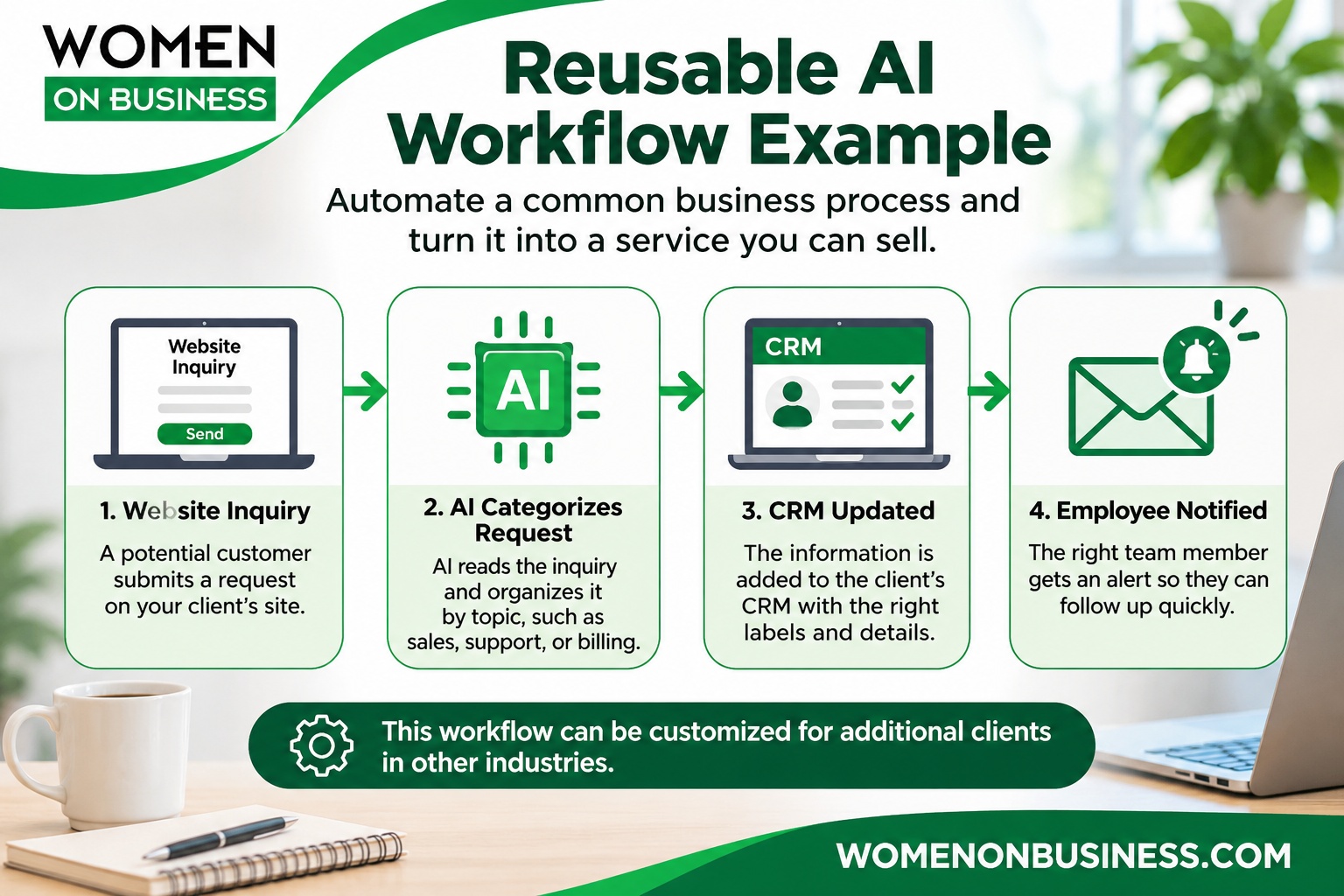
Once you’ve built and tested that workflow, you could customize it for other consulting firms, agencies, or service businesses. Other workflows you could create include customer review monitoring, invoice processing, meeting follow-ups, survey analysis, and email organization.
You don’t have to build an AI agent to do this. Many useful automations rely on predefined triggers, rules, and actions. AI can perform specific steps, such as categorizing information or summarizing text.
You could charge a one-time fee to install and customize each workflow, then offer ongoing maintenance for an additional monthly fee.
Keep in mind that reusable workflows still require individual client configuration, testing, and occasional troubleshooting. Software subscriptions and AI usage fees can also affect your costs.
- Skills You Can Use: Organization, process management, logical thinking, problem-solving, and business administration.
- Potential Customers: Consultants, marketing agencies, professional service firms, online retailers, and other small businesses.
- How to Get Started: Learn the basics of Make or Zapier using a simple workflow. Choose a common business problem, create a working demonstration, and develop a repeatable service package.
3. AI Video Advertisement Creator
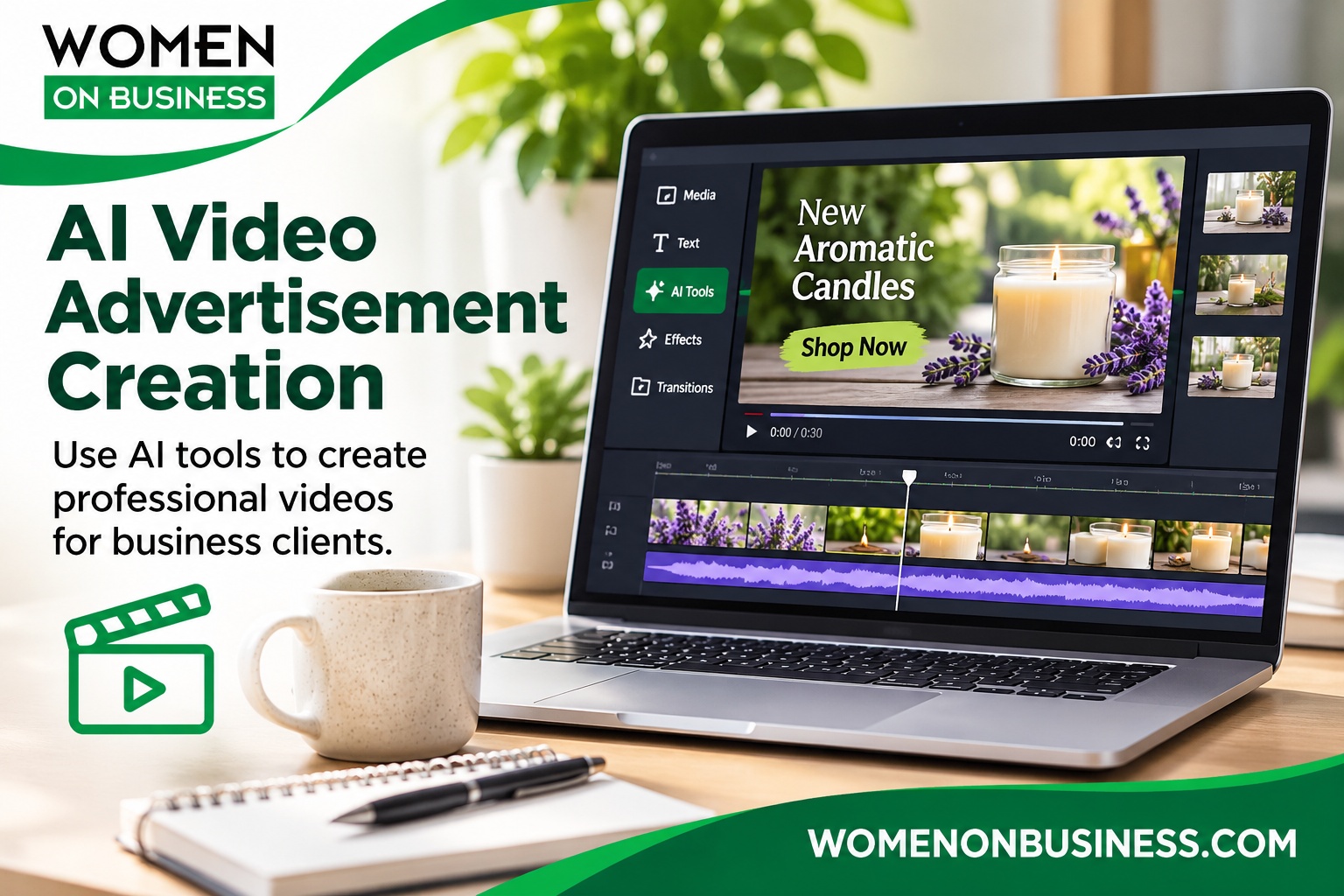
Businesses need videos for social media, advertising, websites, and product promotions. AI tools are making certain types of video production more accessible to people who don’t have expensive equipment or access to a professional studio.
You could use Runway, Adobe Firefly, Canva, and video editing software to create short promotional videos, product demonstrations, animated advertisements, and social media content.
There’s evidence that businesses are interested in these services. Fiverr’s Business Trends Index reported a 265% increase in searches for AI-generated user-style video advertisements during the first six months of 2026.
Of course, knowing how to generate video clips doesn’t automatically make someone an effective video creator. You’ll still need to understand what makes an advertisement persuasive, how to tell a story visually, and how to edit footage into a finished product that represents the client’s brand accurately.
- Skills You Can Use: Marketing, design, storytelling, advertising, and video editing.
- Potential Customers: E-commerce brands, event organizers, local businesses, and marketing agencies.
- How to Get Started: Create several sample videos for fictional products or businesses. Build a small portfolio and offer a defined package, such as three short promotional videos.
4. AI Chatbot Setup and Maintenance Specialist
Many small businesses struggle to respond quickly to customer questions, particularly outside normal business hours. AI-powered chatbots can help by answering routine questions using approved information about a company’s products, services, policies, and procedures.
You could help businesses set up these systems using platforms like Chatbase, Botpress, or Voiceflow.
For example, a service business might need a chatbot that explains its offerings, provides appointment information, and collects inquiries for employees to review.
Once the chatbot is operating, the client may need help updating its information, reviewing conversations, correcting inaccurate responses, and improving how it handles questions. That creates an opportunity for recurring maintenance contracts.
- Skills You Can Use: Customer service, communication, business operations, and technical troubleshooting.
- Potential Customers: Online retailers, service businesses, professional firms, and educational organizations.
- How to Get Started: Build a demonstration chatbot using fictional business information. Learn how to test its responses, establish limits, and direct customers to a person when necessary.
5. AI Data Cleanup and Spreadsheet Specialist
If you’re comfortable working with spreadsheets, you may already have skills that businesses need.
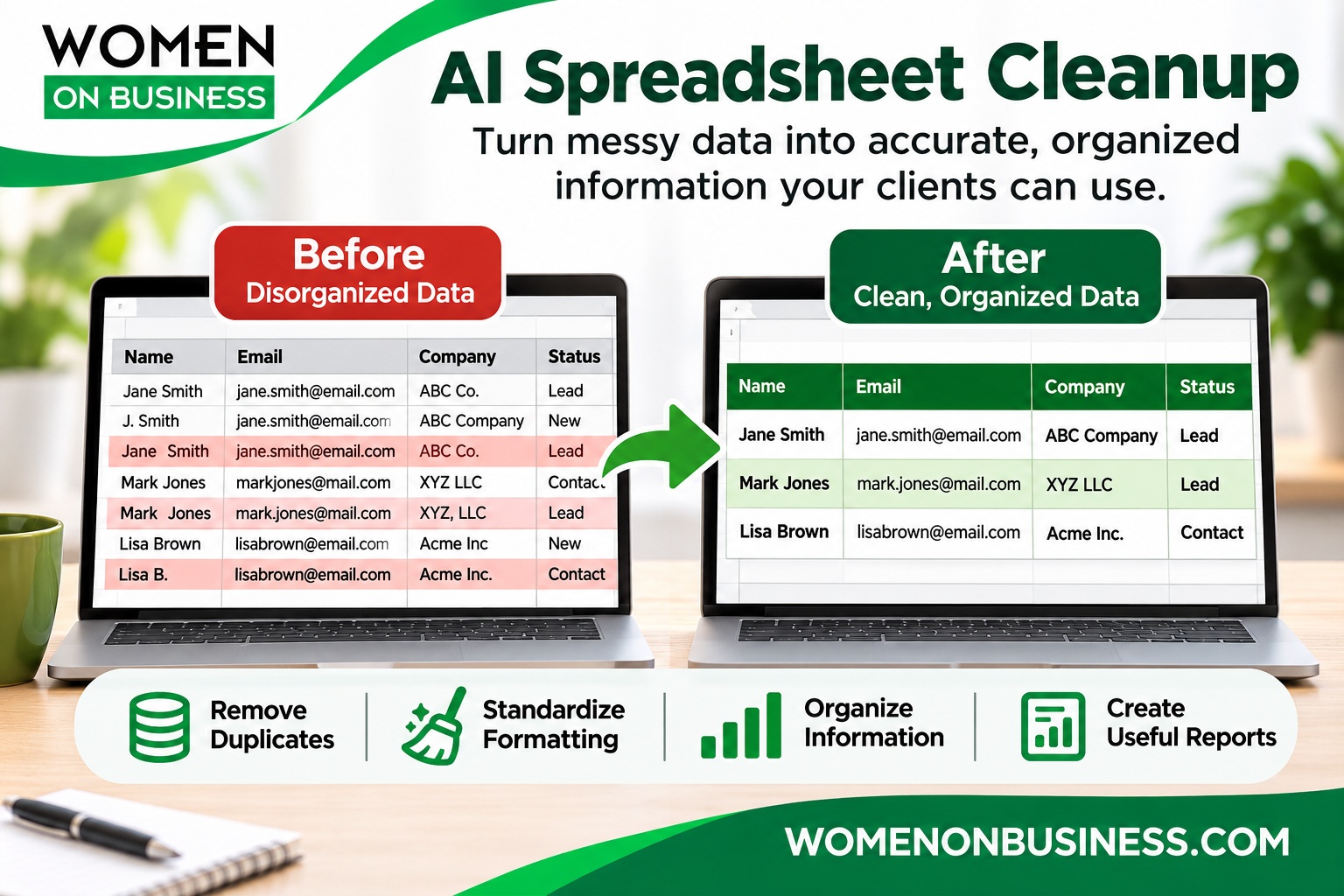
Companies often have customer lists with duplicate contacts, inventory files with inconsistent information, spreadsheets containing outdated records, or documents that need to be converted into structured data.
AI can help you identify problems, categorize information, create formulas, and organize large amounts of data.
You could offer spreadsheet cleanup, data formatting, duplicate identification, document-to-spreadsheet conversion, and basic reporting services using Excel, Google Sheets, AirTable, or AI assistants.
Fiverr’s Business Trends Index reported increased searches for Excel data cleaning and PDF-to-Excel conversion services, suggesting there is already demand for practical data management work on its marketplace.
Accuracy is essential in this role. You need to verify results carefully, particularly when handling customer records, financial information, or business reports.
- Skills You Can Use: Administration, bookkeeping, spreadsheet management, data entry, and attention to detail.
- Potential Customers: Small retailers, consultants, nonprofits, sales teams, and bookkeeping firms.
- How to Get Started: Create sample spreadsheets showing how you can transform disorganized data into clean, usable information. Offer a fixed-price cleanup package for a defined number of records.
6. AI Training and Adoption Coach
Business owners may understand that AI could help their companies, but many don’t know where to begin or how to use it effectively. If you have experience teaching, managing employees, consulting, or improving business processes, you could help companies introduce AI into their everyday work.
For example, you might teach a small marketing team how to use ChatGPT to organize campaign research or show an administrative team how to summarize meeting notes and prepare reports.
You could offer introductory workshops, individual coaching, team training, customized AI usage guides, or ongoing consulting.
As discussed in the Women on Business article The Real Cost of AI at Work Is Falling on Employees, many employees are struggling to get adequate AI training and support from their employers. That creates an opportunity for qualified professionals who can teach practical AI skills.
- Skills You Can Use: Training, teaching, consulting, management, human resources, and communication.
- Potential Customers: Small businesses, nonprofits, professional associations, and local business organizations.
- How to Get Started: Choose an audience you understand and develop a short workshop that demonstrates several useful AI applications. Offer it to businesses or professional groups.
7. AI-Powered Customer Feedback Analyst
Customer reviews, survey responses, and support messages contain information that businesses can use to improve their products and services. The challenge is finding useful patterns when feedback is scattered across hundreds or thousands of comments.
With tools like ChatGPT, Claude, and spreadsheets, you can help businesses organize feedback into categories, identify recurring complaints, summarize customer suggestions, and prepare reports.
For example, an online retailer might hire you to analyze customer reviews and identify complaints about shipping delays, product sizing, or confusing return policies. Your report could help the retailer understand which issues deserve attention.
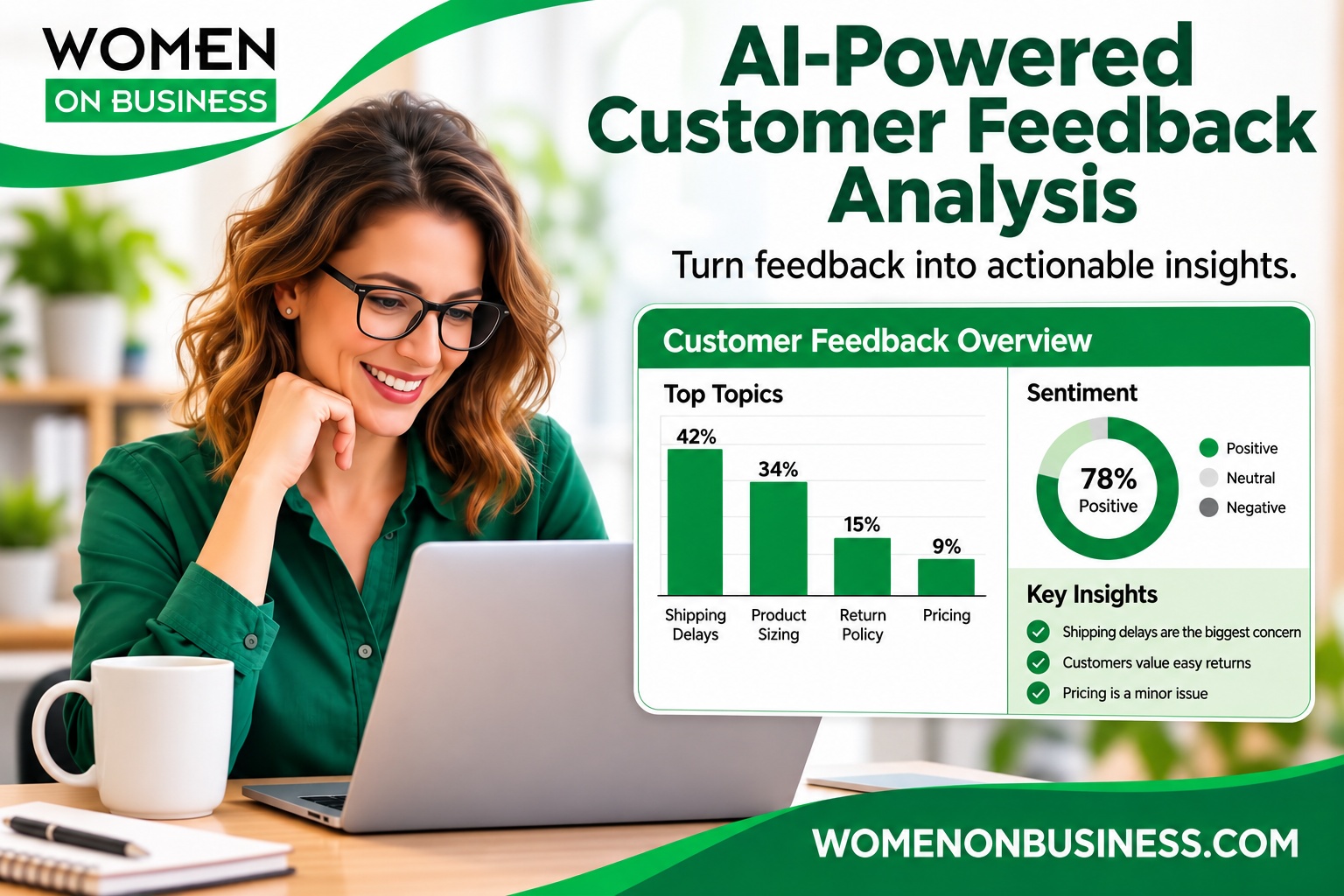
This service requires more than asking AI to summarize a collection of comments. You’ll need to verify the findings, consider the context, and explain the results in language business owners can use.
- Skills You Can Use: Research, analytics, marketing, customer service, and business operations.
- Potential Customers: Online retailers, hospitality businesses, software companies, and service providers.
- How to Get Started: Create a sample customer feedback report using publicly available or fictional data. Show how the analysis could support business decisions.
8. AI E-Commerce Product Listing Optimization Specialist
Online stores may have hundreds or thousands of products, and keeping their listings accurate and consistent can be difficult. AI tools can assist with organizing product information, improving descriptions, identifying missing attributes, categorizing merchandise, and preparing product images.
You could help businesses update listings on Shopify, Etsy, Amazon, or their own e-commerce websites. For example, a retailer might hire you to improve 100 product listings by standardizing titles, descriptions, product specifications, and categories.
This work requires an understanding of online shopping behavior and the rules of the platforms your clients use.
- Skills You Can Use: E-commerce, merchandising, retail, marketing, copywriting, and product management.
- Potential Customers: Online retailers, independent brands, marketplace sellers, and e-commerce agencies.
- How to Get Started: Select a particular e-commerce platform, learn its listing requirements, and create before-and-after examples. Offer optimization packages based on the number of products.
9. AI Model Evaluator and Fact-Checker
AI companies need people to evaluate the quality of their systems’ responses. This work can involve comparing answers, checking factual accuracy, identifying unclear instructions, labeling data, or assessing how well an AI model completes specific tasks.
Depending on the project, companies may look for people with writing, research, language, mathematics, coding, or specialized professional knowledge.
Upwork’s In-Demand Skills report identified AI data annotation and labeling as a fast-growing skill category. However, assignment availability and pay can vary considerably. Some projects require qualifications, screening tests, or advanced expertise.
- Skills You Can Use: Critical thinking, research, writing, fact-checking, and subject-matter expertise.
- Potential Customers: AI development companies, research organizations, and companies conducting AI evaluations.
- How to Get Started: Research legitimate AI evaluation providers, review their requirements, and apply for assignments matching your qualifications. Be cautious of companies requesting upfront payments or sensitive personal information before you’ve verified their legitimacy.
10. AI Presentation and Pitch Deck Designer
Businesses regularly need presentations for sales meetings, employee training, conferences, investor discussions, and customer proposals. If you have a good eye for design and know how to communicate ideas clearly, you could offer presentation design services.
Tools like Gamma, Canva, and Microsoft Copilot can help organize material, generate layout ideas, and develop initial slides. Your role is to transform the material into a clear, professional presentation.
For example, a consultant might provide a lengthy report and hire you to turn it into a 15-slide presentation for executives.
Strong presentation design involves deciding which information deserves emphasis, simplifying complicated ideas, and creating visuals that support the message.
- Skills You Can Use: Design, writing, communication, business strategy, and marketing.
- Potential Customers: Consultants, startups, corporate trainers, sales teams, and professional speakers.
- How to Get Started: Create three sample presentations serving different business purposes. Offer packages based on presentation length and complexity.
11. AI Search Visibility Specialist
Businesses are increasingly interested in understanding how their brands and content appear in AI-generated search responses. That creates opportunities for people with SEO and content marketing experience.
An AI search visibility specialist helps businesses evaluate how their information is represented in AI search tools, identify content gaps, and improve website information so it’s easier to discover and understand.
Services could include content audits, structured data recommendations, brand information reviews, and monitoring how a company appears in relevant AI-generated answers.
This work requires knowledge of traditional SEO as well as an understanding of how AI-assisted search systems use online information.
- Skills You Can Use: SEO, content strategy, website management, analytics, and digital marketing.
- Potential Customers: B2B companies, brands, software businesses, consultants, and online retailers.
- How to Get Started: Build your knowledge of AI search systems and create sample visibility audits. If you have expertise in an industry, focus your services on that industry and promote your unique ability to provide informed recommendations.
12. AI-Powered Digital Accessibility Content Specialist
Businesses and publishers need digital content that people with different abilities can access and understand. AI can assist with parts of that work, including preparing image descriptions, generating draft video captions, organizing transcripts, and identifying potentially unclear language.
You could offer services that help organizations improve the accessibility of their existing digital content. For example, a website publisher might hire you to write descriptive Alt-Text for hundreds of images or review automatically generated captions for a library of training videos.
You’ll need to understand accessibility principles and review AI-generated output carefully. The Web Content Accessibility Guidelines from W3C provide a useful foundation for learning about digital accessibility.
- Skills You Can Use: Writing, editing, web content management, and accessibility knowledge.
- Potential Customers: Publishers, nonprofits, educational organizations, and small businesses.
- How to Get Started: Learn foundational accessibility practices, build examples using test content, and offer clearly defined services such as Alt-Text writing or transcript editing.
13. AI Voiceover and Audio Production Specialist
Businesses need audio for training programs, product demonstrations, explainer videos, presentations, and other communications. AI voice generation and editing tools can help you produce polished audio without traditional recording equipment for every project.
Using platforms like ElevenLabs and Descript, you could create narration from approved scripts, edit recordings, improve audio quality, or prepare multilingual audio with appropriate language review.
You might help a software company produce narration for product tutorials or create voiceovers for a consultant’s training presentations. Audio production still requires attention to pacing, pronunciation, clarity, and the intended audience, so you can combine your skills with AI to meet clients’ needs.
- Skills You Can Use: Audio editing, communication, video production, writing, and media production.
- Potential Customers: Software companies, trainers, educators, marketing agencies, and online businesses.
- How to Get Started: Create sample audio projects using properly licensed voices and scripts. Develop a portfolio and offer a specific service, such as narration for short training videos.
How to Choose the Best AI Side Hustle for Your Skills
With so many possibilities, choosing an AI side hustle can feel overwhelming. The easiest starting point is to consider what people already trust you to do well.
If you’re an experienced writer or marketer, AI-assisted content services could be a natural fit. Administrative experience may prepare you for spreadsheet cleanup or workflow automation. If you’ve spent years training employees or managing teams, AI coaching could allow you to share your knowledge in a new way.
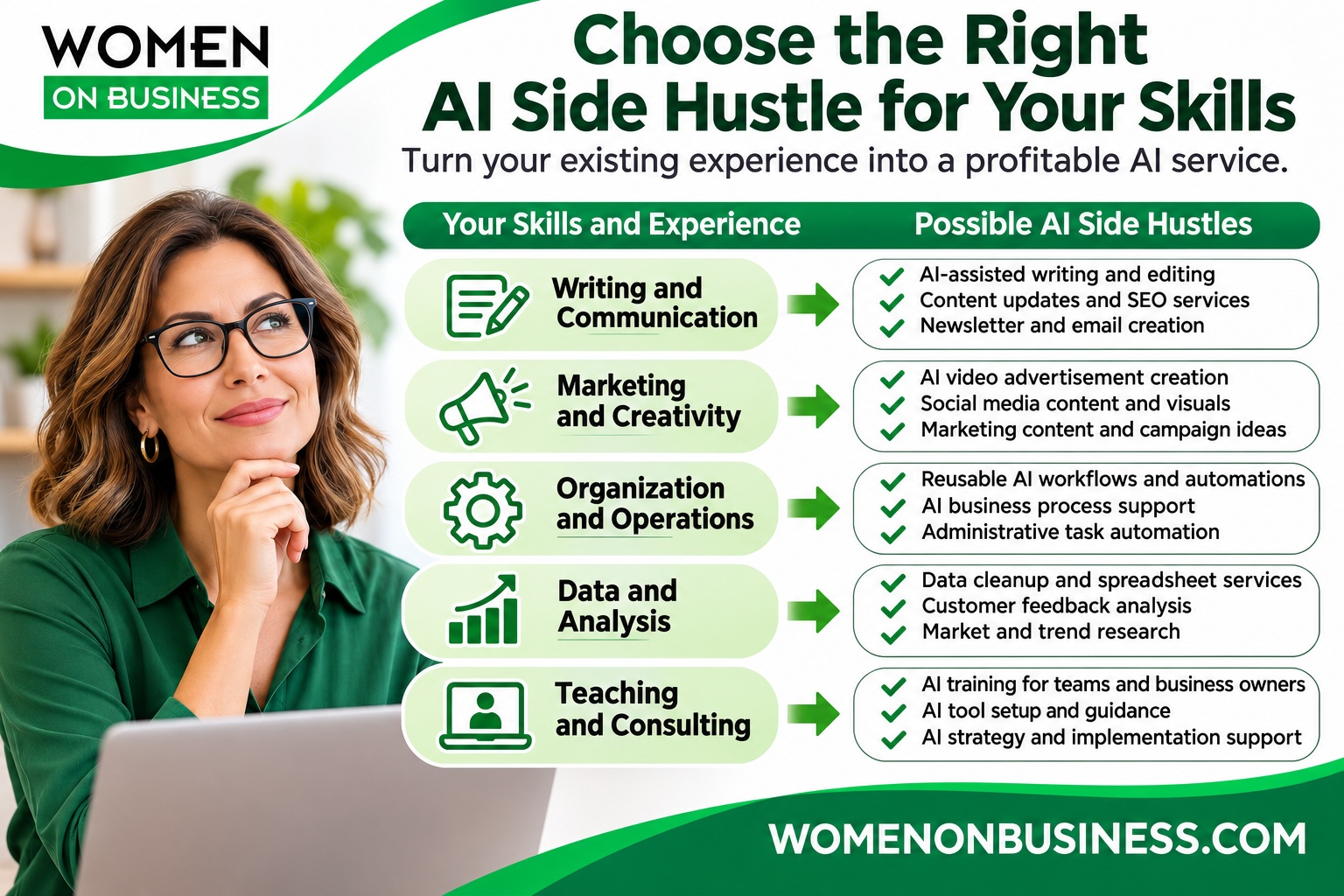
You should also think about the kind of business you want to run. Some opportunities, such as AI evaluation assignments, may let you complete contract work without managing your own customers. Others require finding clients, negotiating projects, and maintaining ongoing relationships.
Consider your available time, startup budget, interest in learning new tools, and willingness to market your services.
Most importantly, don’t underestimate the value of your experience. My article about the 10 Human Skills AI Can’t Replace and How to Improve Them explains why skills such as critical thinking, creativity, and communication remain valuable as AI becomes more common.
Those skills can help you produce better results than someone relying entirely on automated tools, and better results should help you attract and retain more paying work for your side hustle.
How to Find Your First Paying Customer for an AI Side Hustle
Learning to use AI tools is only part of starting a successful side business. You also need customers who are willing to pay for your services.
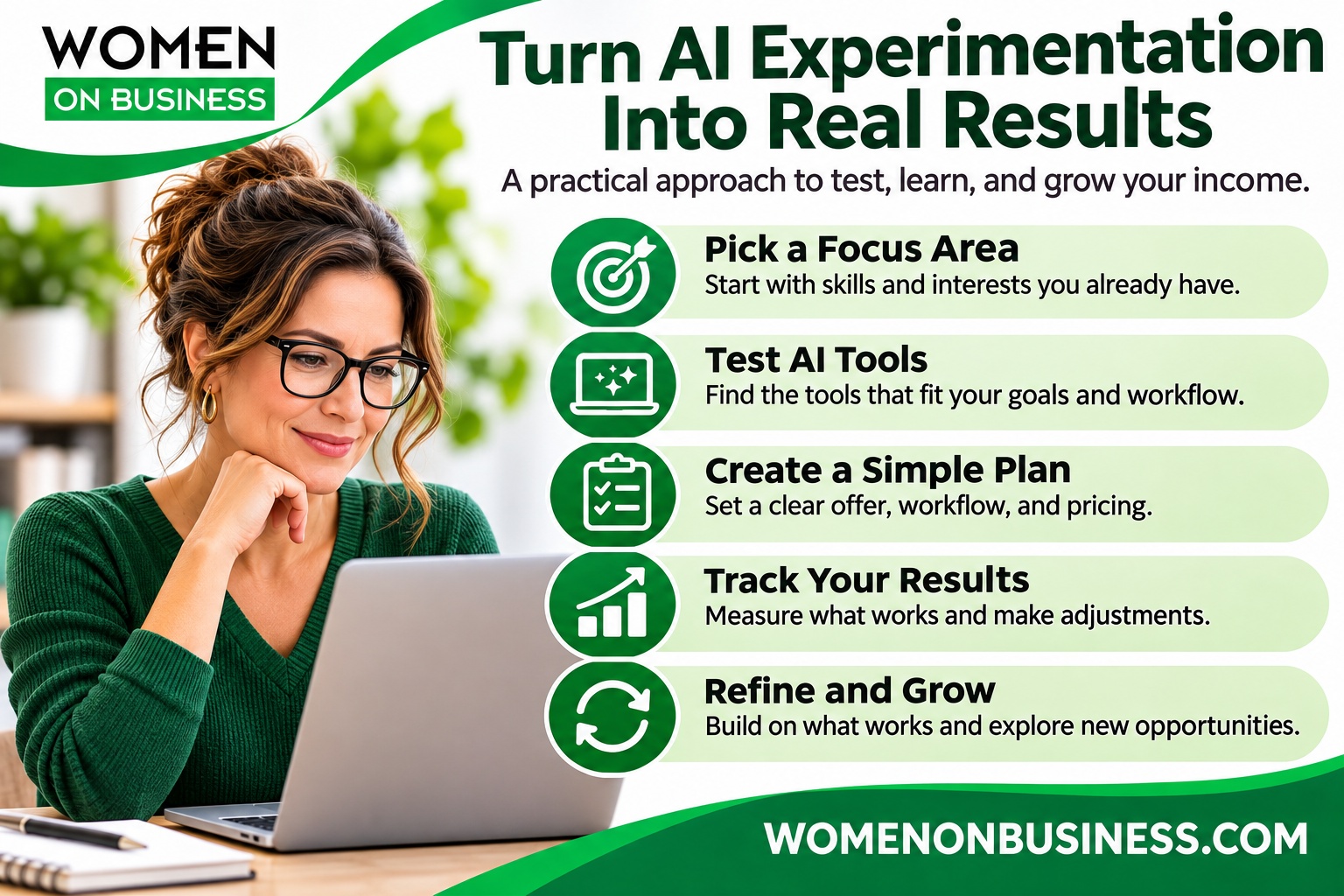
Start by choosing a specific audience and identifying a problem you can help solve.
For example, offering “AI services for businesses” is vague. Offering to organize customer inquiries for small consulting firms gives potential customers a clearer understanding of what they’ll receive.
Next, create a few work samples. You could develop a demonstration workflow, prepare a sample customer feedback report, design a presentation, or build a writing portfolio.
Then, reach out to businesses that could benefit from your services. Your professional network, former colleagues, local business groups, and freelance marketplaces may provide opportunities. For more ideas, read How to Find Your First 10 Business Clients.
Don’t assume potential customers will understand why they need AI. Explain what your service will accomplish, whether that’s reducing repetitive work, improving content quality, or organizing information.
Start with projects you can manage confidently. Deliver what you promise, communicate clearly, and ask satisfied clients for testimonials or referrals. As you gain experience, you’ll have a better understanding of which services customers value and whether you can turn occasional projects into recurring contracts.
Mistakes to Avoid When Starting an AI Side Hustle
AI tools can make certain tasks faster, but they also introduce risks that you need to manage.
One of the biggest mistakes is offering services you don’t understand simply because AI makes them appear easy. For example, generating website copy with ChatGPT doesn’t mean you know how to write effective marketing messages that drive results.
Another mistake is delivering AI-generated work without reviewing it. Incorrect information, misleading visuals, poor recommendations, and technical errors can damage your client’s business and your reputation.
Protecting client information is equally important. Never upload confidential documents, customer records, or proprietary data to an AI tool without appropriate permission and safeguards.
Be realistic about expenses, too. Software subscriptions, usage fees, revisions, and ongoing maintenance can reduce your profits if you don’t account for them when setting prices.
If you’re new to entrepreneurship, the Ultimate Guide to Starting a Small Business as a Female Entrepreneur provides additional guidance on planning and launching a business.
Frequently Asked Questions About AI Side Hustles
What are the best AI side hustles for beginners?
Some of the best AI side hustles for beginners include AI-assisted freelance writing, presentation design, spreadsheet cleanup, and AI workflow development. These opportunities can build on skills you already have, although you’ll still need to learn the relevant tools and meet customers’ quality expectations. The best choice depends on your experience and interests.
Can you make money with AI without coding?
Yes. You can earn money using AI for writing, editing, video production, presentation design, data organization, training, and other services without knowing how to code. Platforms like Make and Zapier also let you build many business automations without coding.
What AI side hustles can you start from home?
Many AI side hustles can be operated from home, including freelance writing, video editing, chatbot setup, AI workflow automation, presentation design, and customer feedback analysis. You’ll generally need a reliable computer, internet connection, appropriate software, and a way to communicate with clients. Some projects may require additional equipment or specialized tools.
How much does it cost to start an AI side hustle?
Startup costs depend on the service you choose to offer. Some AI tools offer free plans that are suitable for learning and creating sample projects. More advanced features, higher usage limits, and commercial applications may require paid subscriptions. You’ll also need to consider expenses such as business registration, website hosting, insurance, and marketing when applicable.
Do you need to build AI agents to sell automated workflows?
No. You can create useful business workflows with Make, Zapier, and similar no-code platforms without developing autonomous AI agents. Many workflows follow predefined steps, such as collecting information from a form, using AI to categorize the information, updating a spreadsheet, and sending a notification. These automations can often be saved and customized for other clients.
How can you find customers for AI freelance services?
Start by identifying businesses that need the specific service you offer. Build a small portfolio demonstrating your skills, then contact potential customers through professional networks, referrals, business communities, and legitimate freelance marketplaces. Clearly explain the problem you solve and what customers will receive. A focused service offer is usually easier to communicate than general AI expertise.
Can an AI side hustle become a full-time business?
Yes, some AI side hustles can grow into full-time businesses, particularly services that generate repeat projects or ongoing contracts. For example, you could develop a freelance writing business, offer monthly chatbot maintenance, or sell reusable automation solutions to multiple clients. However, income isn’t guaranteed, and growth depends on customer demand, pricing, your skills, and your ability to run the business profitably.
Turn Your Existing Skills into an AI Side Hustle
You don’t need to master every new AI tool to find an opportunity worth pursuing. Start with what you already know and look for ways AI can help you deliver a valuable service more efficiently.
Choose one idea that interests you, spend time learning the tools, and create a sample of the work you could sell. As you gain experience, you can improve your offerings, develop repeatable processes, and build relationships with clients that lead to repeat business and new clients through word-of-mouth marketing.
AI may help you accomplish more in less time, but your knowledge, judgment, creativity, and ability to solve problems are what can turn those capabilities into a business.
