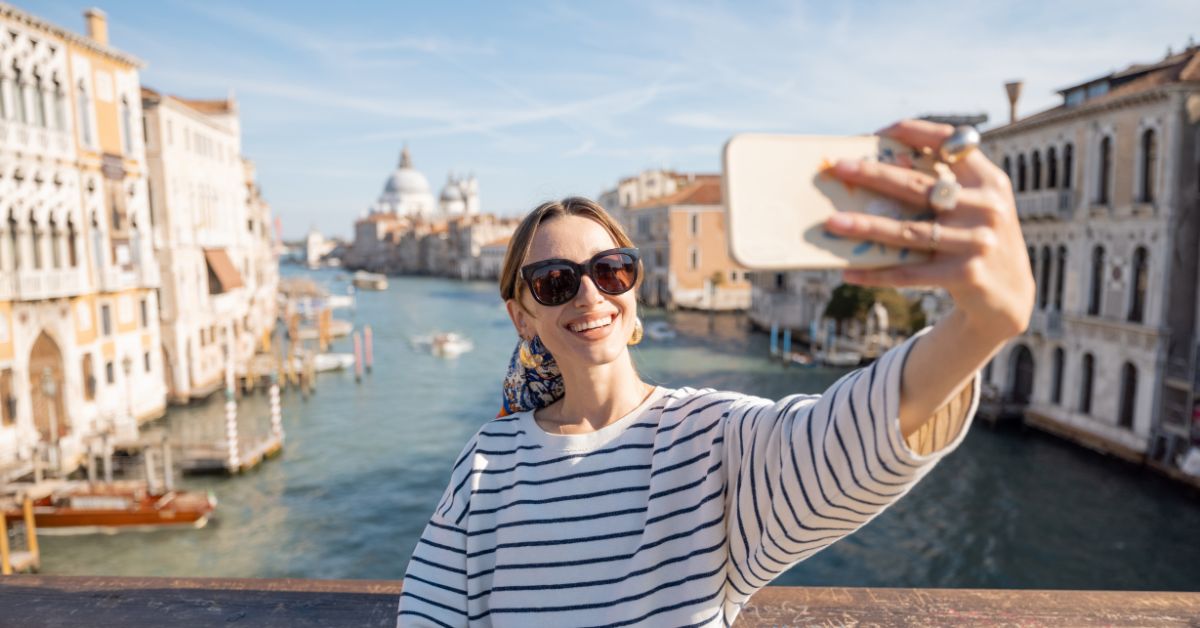
Brought to you by Dreamstime:
Social media moves fast. Feeds refresh endlessly, attention spans shrink by the second, and brands compete in an environment where users often decide whether to engage with content in less than a heartbeat. In that landscape, visuals matter enormously.
Travel photography has become one of the most effective visual styles for social media because it naturally creates emotion, atmosphere, and curiosity. A dramatic mountain view, a neon-lit city street after rain, a quiet beach at sunrise, or a cozy café tucked into an old European alleyway can instantly stop the scroll and invite people into a moment.
But not all travel images work equally well on social platforms. Some photos create strong emotional engagement while others disappear into the background despite technically being beautiful. Choosing the right professional stock photos for social media requires more than simply selecting attractive destinations. It involves understanding branding, storytelling, audience psychology, platform behavior, composition, and emotional tone.
The best travel-inspired visuals help social media content feel immersive, relatable, aspirational, and visually consistent while still supporting the larger brand identity.
Why Travel Photography Performs So Well on Social Media
Travel imagery naturally taps into emotions people already associate with exploration, freedom, relaxation, creativity, and discovery. These emotional themes tend to perform extremely well in social environments because they create instant atmosphere.
People scrolling through social feeds are often looking for inspiration, entertainment, escape, or emotional connection. Travel photography delivers all of those quickly and visually.
Even audiences who are not actively planning trips still respond to travel visuals because they symbolize larger emotional ideas:
- Adventure
- Possibility
- Calmness
- Luxury
- Freedom
- Curiosity
- Transformation
- Creativity
That emotional flexibility makes travel photography useful far beyond the tourism industry itself.
Wellness brands, fashion companies, technology startups, fitness businesses, lifestyle creators, and ecommerce brands all use travel-inspired imagery to create stronger emotional storytelling.
Start With Your Brand Identity
Before choosing travel stock photography, it’s important to understand the emotional tone of the brand itself.
Different travel visuals communicate very different personalities.
Nature-Focused Travel Photography
Mountains, forests, hiking trails, lakes, deserts, and open landscapes often communicate:
- Peacefulness
- Simplicity
- Wellness
- Freedom
- Sustainability
- Reflection
These visuals work especially well for wellness brands, outdoor companies, mindfulness content, eco-friendly businesses, and lifestyle marketing.
Luxury Travel Imagery
High-end resorts, rooftop lounges, yachts, boutique hotels, elegant architecture, and tropical escapes create feelings of:
- Sophistication
- Exclusivity
- Aspiration
- Comfort
- Prestige
Luxury-oriented brands often benefit from this style even if they aren’t directly connected to travel.
Urban Travel Photography
Modern city scenes, coffee shops, airports, subway stations, rooftop views, and neon-lit streets often suggest:
- Innovation
- Energy
- Ambition
- Creativity
- Global connection
This style tends to work well for startups, fashion brands, creative agencies, and tech companies.
Cultural and Human-Centered Photography
Street photography, markets, local food scenes, and authentic travel moments often feel emotionally rich and relatable. These images help brands feel human and grounded.
Choosing imagery that aligns naturally with the brand personality creates stronger consistency across social platforms.
Prioritize Emotion Over Location
One of the biggest mistakes people make when choosing travel imagery is focusing too heavily on famous destinations instead of emotional impact.
A recognizable landmark does not automatically create strong engagement.
In many cases, emotionally atmospheric scenes perform far better than obvious tourist shots. A foggy road through the woods may feel more immersive than a crowded photo of a famous monument. A quiet train station at night may create more curiosity than a standard beach photo.
Social media audiences respond more strongly to mood than location recognition.
When selecting travel stock photos, ask:
- Does this image create a feeling?
- Does it invite curiosity?
- Would it stop someone from scrolling?
- Does it support the message emotionally?
The emotional atmosphere matters far more than whether viewers recognize the destination.
Look for Authenticity
Social media audiences have become extremely skilled at identifying overly staged visuals. Photos that feel artificial or excessively polished often struggle to create emotional connection.
Authenticity tends to outperform perfection.
The best travel stock photography for social media often includes:
- Natural lighting
- Realistic environments
- Subtle imperfections
- Genuine human moments
- Atmospheric details
- Cinematic texture
Images that feel lived-in and believable usually perform better than overly posed tourist scenes.
A traveler laughing naturally in a café often feels more engaging than a perfectly posed group staring directly into the camera. Rain-soaked streets, wrinkled maps, train tickets, worn luggage, and quiet environmental details create realism that audiences emotionally trust.
Choose Images with Strong Composition
Social media platforms require flexibility. Images may need to work across:
- Square posts
- Vertical stories
- Reels covers
- Carousel posts
- Horizontal banners
- Profile headers
- Advertisements
- Mobile previews
Strong composition helps images remain visually effective across different formats.
Negative Space Is Important
Photos with open skies, empty walls, blurred backgrounds, calm water, or uncluttered environments allow room for text overlays and graphic elements.
This makes them easier to use in promotional content without making the design feel crowded.
Visual Direction Matters
Roads, bridges, pathways, rivers, and architecture naturally guide the eye through an image. This creates movement and helps viewers process content more quickly.
Strong directional composition often increases engagement because the image feels dynamic instead of static.
Maintain a Consistent Color Palette
One of the easiest ways to make a social media account look more professional is by maintaining visual consistency.
Travel photography can quickly become chaotic if every image has drastically different colors, lighting styles, or editing tones.
Strong social media branding often relies on:
- Consistent warmth or coolness
- Similar contrast levels
- Cohesive color grading
- Repeating visual moods
- Balanced tonal harmony
For example, a wellness brand may consistently use earthy neutrals, soft greens, warm sunlight, and muted blues. A luxury brand may lean toward dark shadows, gold tones, deep blacks, and elegant lighting.
Consistency creates stronger brand recognition over time.
Think About Mobile Viewing First
Most social media users view content on mobile devices. That means travel photography should remain visually effective even on smaller screens.
Complicated images with too many small details may lose impact on mobile.
Strong social media travel imagery usually includes:
- Clear focal points
- Readable composition
- Bold lighting contrast
- Simplicity
- Visual separation
Images should feel instantly understandable at a glance.
Use Travel Photography to Support Storytelling
Travel visuals work best when they support the story behind the post rather than simply acting as decoration.
For example:
- A productivity brand might use airport or train imagery to symbolize flexibility and remote work
- A skincare company may use coastal imagery to evoke calmness and restoration
- A fitness brand may use mountain landscapes to represent resilience and challenge
- A creative agency may use urban travel photography to communicate innovation and energy
The travel imagery becomes symbolic.
This approach creates stronger emotional depth because the visuals reinforce the message rather than competing with it.
Avoid Overused Travel Clichés
Some travel imagery has become so widely used that it no longer feels fresh or engaging.
Overused clichés often include:
- Generic beach loungers
- Perfectly posed tourist groups
- Standard airplane wing shots
- Overprocessed sunsets
- Obvious postcard landmarks
While these images can still work occasionally, social media audiences often respond more strongly to visuals that feel unique, atmospheric, or emotionally nuanced.
Look for:
- Quiet moments
- Cinematic lighting
- Unexpected perspectives
- Environmental storytelling
- Human detail
- Mood-driven imagery
Subtlety often creates stronger engagement than spectacle.
Match the Platform Style
Different social platforms encourage different visual behaviors.
Atmosphere, composition, color consistency, and emotional storytelling matter heavily.
Travel imagery that feels aspirational, organized, and lifestyle-focused tends to perform well.
Urban travel photography, modern architecture, airports, and global business themes often fit best.
Human-centered imagery and emotionally warm visuals tend to generate stronger engagement.
TikTok and Reels
Travel visuals with movement, dramatic scenery, and cinematic energy often perform well in short-form video formats.
Understanding platform expectations helps guide image selection more strategically.
Why Travel Photography Remains So Effective
Travel imagery continues to dominate social media because it creates emotional movement. It gives people a temporary escape from routine while also connecting to deeper themes like freedom, ambition, creativity, and exploration.
That emotional resonance makes travel-inspired visuals valuable across almost every type of marketing.
The strongest travel stock photos do not simply show destinations. They create experiences audiences can imagine themselves stepping into.
That feeling is what makes people stop scrolling.
Final Thoughts
Choosing travel stock photography for social media is about much more than finding beautiful places. It’s about selecting imagery that creates emotional connection, reinforces brand identity, and supports visual storytelling in fast-moving digital environments.
The best travel-inspired visuals feel authentic, atmospheric, emotionally engaging, and strategically aligned with the message being shared. They create mood instantly while remaining flexible enough for modern social media formats.
In a crowded online world filled with repetitive content, strong travel photography helps brands feel alive, immersive, and memorable. Sometimes all it takes is a winding road, a glowing city street, or a quiet ocean horizon to turn an ordinary social media post into something people actually pause to experience.
