 Rising expenses can quietly eat away at your small business profits, even when sales are strong. You might be bringing in more revenue than last year while finding that there’s less money left over after paying your bills. It’s a frustrating situation, especially when you’re working harder than ever to keep your business growing.
You’re certainly not alone.
According to the Q3 2026 U.S. Chamber of Commerce Small Business Index, 54% of small business owners identify inflation as their biggest challenge. Revenue concerns rank second at 24%, followed by supply chain issues at 16%.
The pressure is worst for the smallest businesses. The Chamber found that 28% of businesses with fewer than five employees identify revenue as a major challenge, compared with 16% of businesses employing 20 or more people.
Fortunately, you have more control over your profitability than you might think. Protecting your small business profit margins requires understanding where your money goes, making informed financial decisions, and finding opportunities to increase the value of every sale.
Key Takeaways
- Rising costs are squeezing small business profits. The U.S. Chamber of Commerce reports that 54% of small businesses identify inflation as their biggest challenge in Q3 2026.
- Revenue growth doesn’t guarantee profitability. Tracking product and service margins helps you understand which sales actually generate profits.
- Strategic pricing adjustments can protect your bottom line. Regularly reviewing prices helps you respond to changing expenses.
- Small operational improvements add up. Reducing unnecessary expenses, improving payment processes, and strengthening customer retention can improve profitability.
- Financial visibility is essential. Monitoring a few key financial metrics makes it easier to identify problems before they become expensive.
Why Small Business Profit Margins Are Under Pressure
The latest economic research presents an interesting picture of small business confidence.
The U.S. Chamber of Commerce’s September 2026 report found that 71% of small businesses consider their overall financial and operational health good, and 72% are comfortable with their cash flow. However, only 27% believe the national economy is in good health.
Meanwhile, the National Federation of Independent Business (NFIB) reported in October 2026 that its Small Business Uncertainty Index reached 90 in September, considerably above its historical average of 68. Inflation was the second most frequently reported top business problem.
These findings highlight the challenges of operating a profitable business when economic conditions remain unpredictable.
The good news is that protecting your profit margins doesn’t necessarily require significant investments or dramatic changes. Here are seven strategies you can put into practice.
1. Identify Your Most Profitable Products and Services
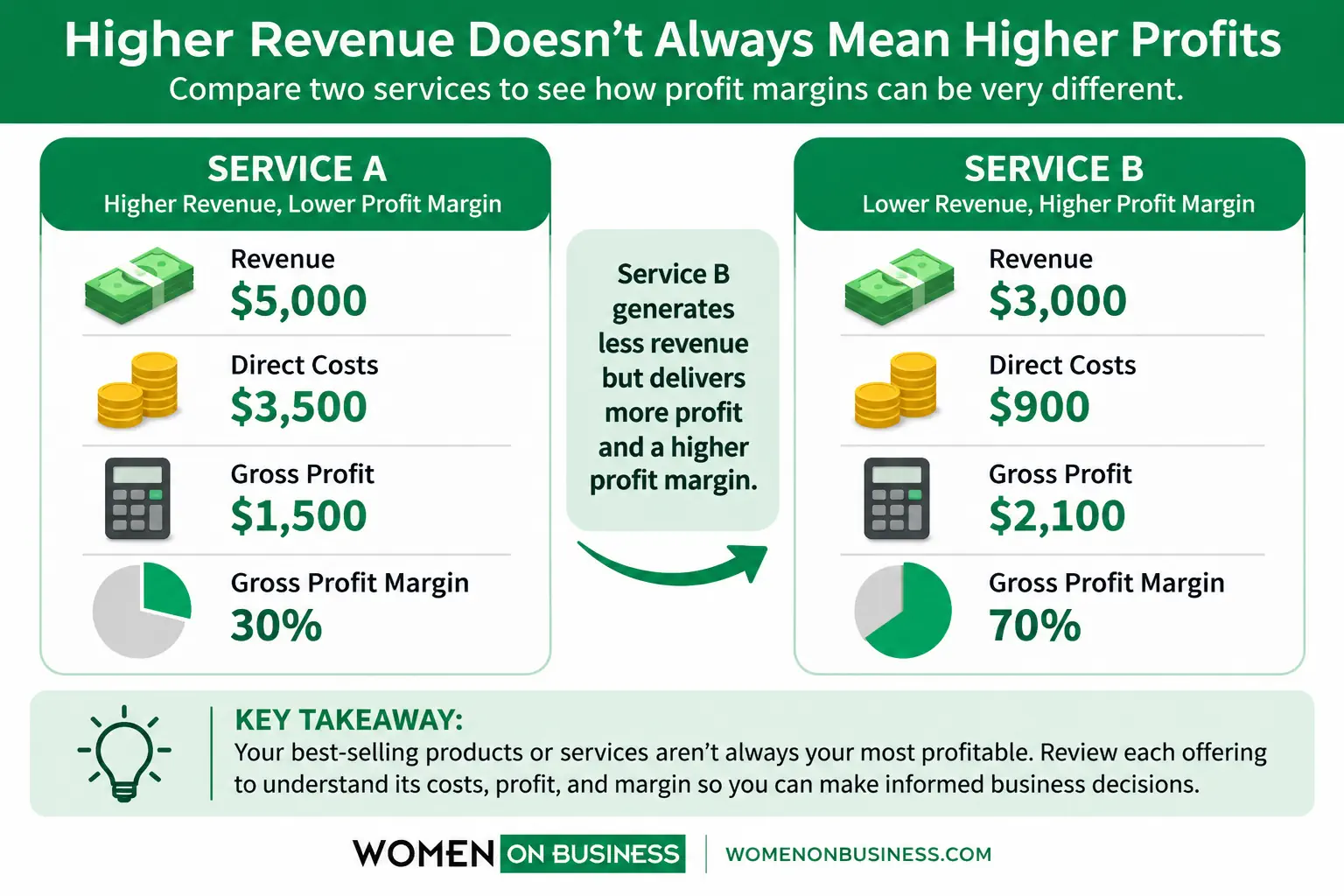
Your best-selling products or services aren’t necessarily your most profitable ones.
For example, imagine you operate a consulting business offering two services. Service A generates $5,000 in monthly revenue but requires $3,500 in direct expenses. Service B generates $3,000 but costs just $900 to deliver.
Service A generates $1,500 in gross profit, while Service B generates $2,100. Despite producing less revenue, Service B contributes more toward your business’s overhead expenses and eventual net profit.
Review your products and services individually. Calculate their gross profit margins by subtracting direct costs from revenue and dividing the result by revenue.
Once you understand which offerings generate the strongest margins, you can make better decisions about pricing, marketing, and resource allocation.
2. Review Your Pricing Before Rising Costs Eliminate Profits
When did you last evaluate your prices? Many small business owners hesitate to increase prices because they’re afraid of losing customers. That’s understandable, particularly when customers are watching their own spending.
However, keeping prices unchanged while expenses increase can make a previously profitable product or service financially unsustainable.
Suppose you charge $100 for a service that costs $60 to deliver. Your gross profit margin is 40%. If delivery costs increase to $70, your margin drops to 30% unless you adjust your price.
Review pricing regularly and consider what customers value most about your offerings. You might introduce tiered packages, charge separately for additional services, or adjust prices selectively rather than implementing an across-the-board increase.
When communicating price changes, explain them clearly and give customers reasonable notice.
3. Find Hidden Expenses That Reduce Profit Margins
Some expenses are obvious. Others gradually increase until they consume a surprising portion of your revenue.
Start by reviewing three to six months of business expenses. Look closely at software subscriptions, payment processing fees, insurance premiums, shipping charges, and professional services.
Are you paying for applications you rarely use? Have transaction fees increased? Could you renegotiate contracts or consolidate services? For example, eliminating three unnecessary subscriptions costing $50 each would save $1,800 annually.
Be careful about cutting expenses that contribute directly to customer satisfaction or employee performance. Saving money today can become expensive tomorrow if it leads to mistakes, lower-quality service, or lost customers.
4. Improve Cash Flow Through Better Payment Practices
Profitability and cash flow are closely connected, but they measure different aspects of your business. A company can be profitable on paper while struggling to pay its bills because customers haven’t paid their invoices.
If you provide professional services, consider requesting deposits before beginning large projects. Establish clear payment terms, send invoices promptly, and follow up consistently on overdue accounts.
For additional strategies, read these six ways to improve your company’s working capital, including better accounts receivable management and negotiating more favorable supplier terms.
You can also offer convenient electronic payment options or encourage recurring payments when appropriate.
For example, a marketing consultant who collects a 50% deposit before beginning a $4,000 project has $2,000 available to cover initial expenses instead of financing the entire project herself.
Faster collections won’t automatically improve your profit margin, but they can reduce the need for expensive short-term borrowing and help you manage operating costs.
5. Focus Your Marketing on Profitable Customers
Acquiring new customers can require considerable time and money. Before increasing your marketing budget, examine which customers contribute the most to your profitability.
Consider purchase frequency, average transaction value, service requirements, and the cost of acquiring each customer.
You may discover that repeat customers who make smaller purchases generate more profit over time than customers who place large orders but require substantial discounts or additional support.
Use customer purchase histories to identify opportunities for personalized email campaigns, repeat-purchase reminders, and relevant product recommendations. For service businesses, ongoing relationships may create opportunities for retainers or additional services.
The goal is to invest your marketing resources where they’re most likely to generate profitable revenue.
6. Improve Efficiency Without Sacrificing Quality
How much time does your business spend on repetitive administrative work? Manual invoicing, scheduling, data entry, and customer follow-ups can consume hours that could otherwise support revenue-generating activities.
Automation may help reduce that burden. For instance, an appointment-based business could use online scheduling and automated reminders to reduce administrative work and missed appointments.
A retailer might improve inventory management to avoid overstocking slow-moving products.
Start with one process that repeatedly creates delays, errors, or unnecessary expenses. Document how it currently works, identify inefficiencies, and test a more streamlined approach.
Technology isn’t always the answer. Sometimes a clearer procedure or better employee training produces the greatest improvement.
7. Track Financial Metrics Every Month
You can’t protect profit margins effectively if you don’t know whether they’re improving or declining. Fortunately, you don’t need complicated financial reports to start monitoring profitability.
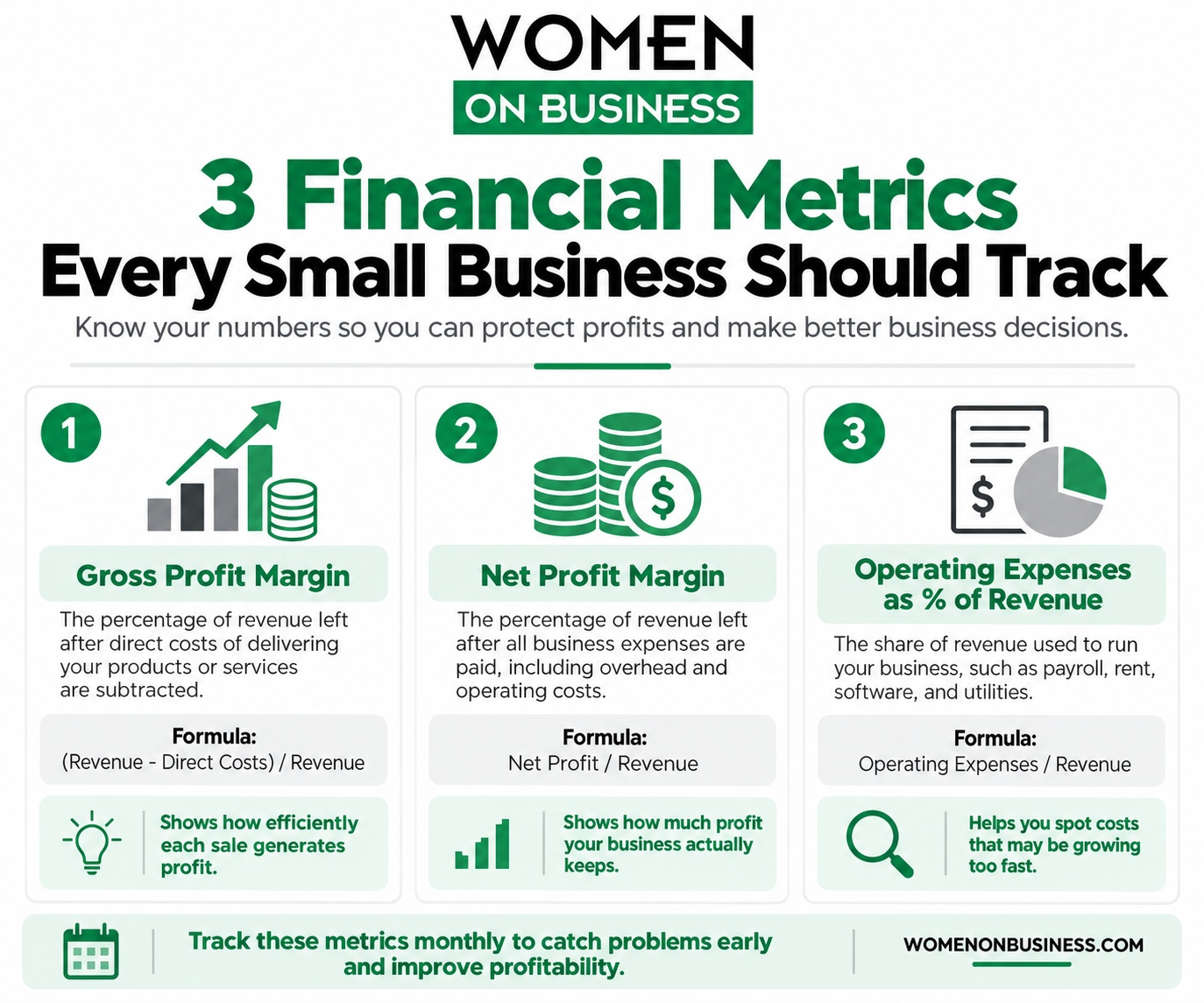
Focus on these three metrics:
- Gross Profit Margin: The percentage of revenue remaining after subtracting the direct costs of producing products or delivering services.
- Net Profit Margin: The percentage of revenue remaining after accounting for all business expenses, including overhead, interest, and taxes.
- Operating Expenses as a Percentage of Revenue: A measure of how much revenue goes toward running your business.
To understand how these numbers fit into your company’s overall financial health, learn more about using financial analysis to evaluate business performance, including profitability ratios, liquidity measures, and financial trends.
Compare these figures monthly and investigate significant changes. For example, if your revenue increases 10% but your operating expenses increase 18%, you should determine what’s driving the difference.
A monthly financial review can help you make adjustments before temporary cost increases become long-term profitability problems.
Protecting Your Profits Starts with Better Decisions
Rising costs and economic uncertainty create real challenges for small business owners. You can’t control inflation, interest rates, or every change in customer spending. However, you can control many of the decisions that influence your profitability.
Start by identifying your most profitable offerings and reviewing your expenses. Then examine pricing, payment practices, marketing investments, and operational efficiency.
As your business becomes more financially stable, consider how you can use excess working capital to increase profits through reinvestment, improved receivables management, and better inventory control.
You don’t have to implement every strategy immediately. Choose the area with the greatest potential impact and build from there. Even modest improvements can strengthen your business’s financial position and give you more flexibility to pursue opportunities when they arise.
Frequently Asked Questions About Small Business Profit Margins
What is a good profit margin for a small business?
A good profit margin depends on your industry, business model, and operating expenses. Service businesses often have different margin expectations than retailers or manufacturers. Compare your margins with relevant industry benchmarks and monitor whether they’re improving over time.
How can a small business increase profit margins without raising prices?
You can improve profit margins by reducing unnecessary expenses, negotiating supplier agreements, streamlining operations, improving productivity, and focusing on higher-margin products or services.
What’s the difference between gross profit margin and net profit margin?
Gross profit margin measures revenue remaining after direct production or service-delivery costs. Net profit margin measures revenue remaining after all business expenses. Both are important because a business can have a healthy gross margin while generating relatively little net profit.
