Women have more educational opportunities, more career choices, and more legal protections than previous generations. Yet in 2026, where you live can still make a significant difference in how fairly you’re paid, how far you advance in your career, and whether you have equal access to leadership opportunities.
The latest WalletHub Best & Worst States for Women’s Equality report reveals just how uneven progress toward gender equality remains across the United States.
WalletHub compared all 50 states using 17 indicators of gender equality, including income disparities, executive representation, entrepreneurship, education, and political empowerment.
The results offer some encouraging examples of progress, but they also reveal persistent problems that should concern every businesswoman, employer, and organizational leader.
Key Takeaways
- Hawaii ranks first for women’s equality in 2026, followed by Maryland, Alaska, Maine, and Vermont. Utah ranks last, with Oklahoma, Texas, Idaho, and South Carolina rounding out the bottom five.
- The gender pay gap remains widespread. Maryland has the smallest income disparity between women and men, while Utah has the largest.
- Women remain underrepresented in executive positions. Massachusetts, New York, and Utah have some of the largest gender gaps in executive representation.
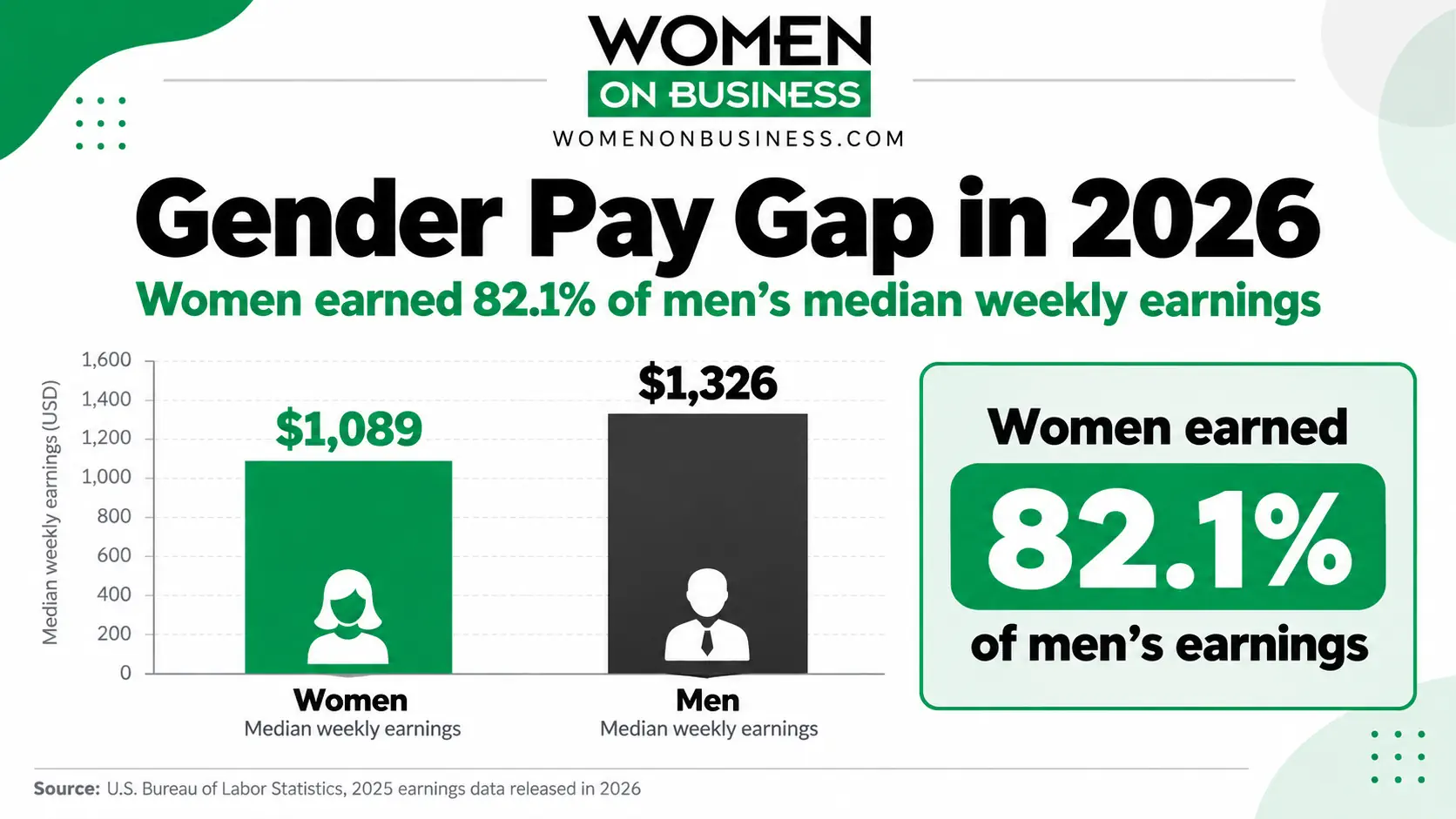
- Women earned just 82.1% of men’s median weekly earnings in 2025, according to the U.S. Bureau of Labor Statistics.
- Women hold only 29% of C-suite positions, and women are still less likely than men to receive their first promotion into management, according to McKinsey and LeanIn.Org.
- Gender equality requires attention at every career stage, from compensation and promotions to executive leadership and entrepreneurship.
The Best and Worst States for Women’s Equality in 2026
WalletHub’s rankings show substantial differences in gender equality across the country. The top 10 and bottom 10 states based on overall rankings are shown below. Note that higher scores indicate better relative gender equality.
Top 10 States for Women’s Equality
|
Rank |
State |
Equality Score |
|
1 |
Hawaii |
77.74 |
|
2 |
Maryland |
73.36 |
|
3 |
Alaska |
71.51 |
|
4 |
Maine |
70.09 |
|
5 |
Vermont |
69.66 |
|
6 |
New Mexico |
69.31 |
|
7 |
Iowa |
68.04 |
|
8 |
Oregon |
67.41 |
|
9 |
California |
66.75 |
|
10 |
Illinois |
65.60 |
Bottom 10 States for Women’s Equality
|
Rank |
State |
Equality Score |
|
41 |
Louisiana |
47.76 |
|
42 |
Montana |
46.62 |
|
43 |
Virginia |
46.47 |
|
44 |
Georgia |
46.46 |
|
45 |
Arkansas |
46.38 |
|
46 |
South Carolina |
42.87 |
|
47 |
Idaho |
41.30 |
|
48 |
Texas |
40.94 |
|
49 |
Oklahoma |
40.67 |
|
50 |
Utah |
32.18 |
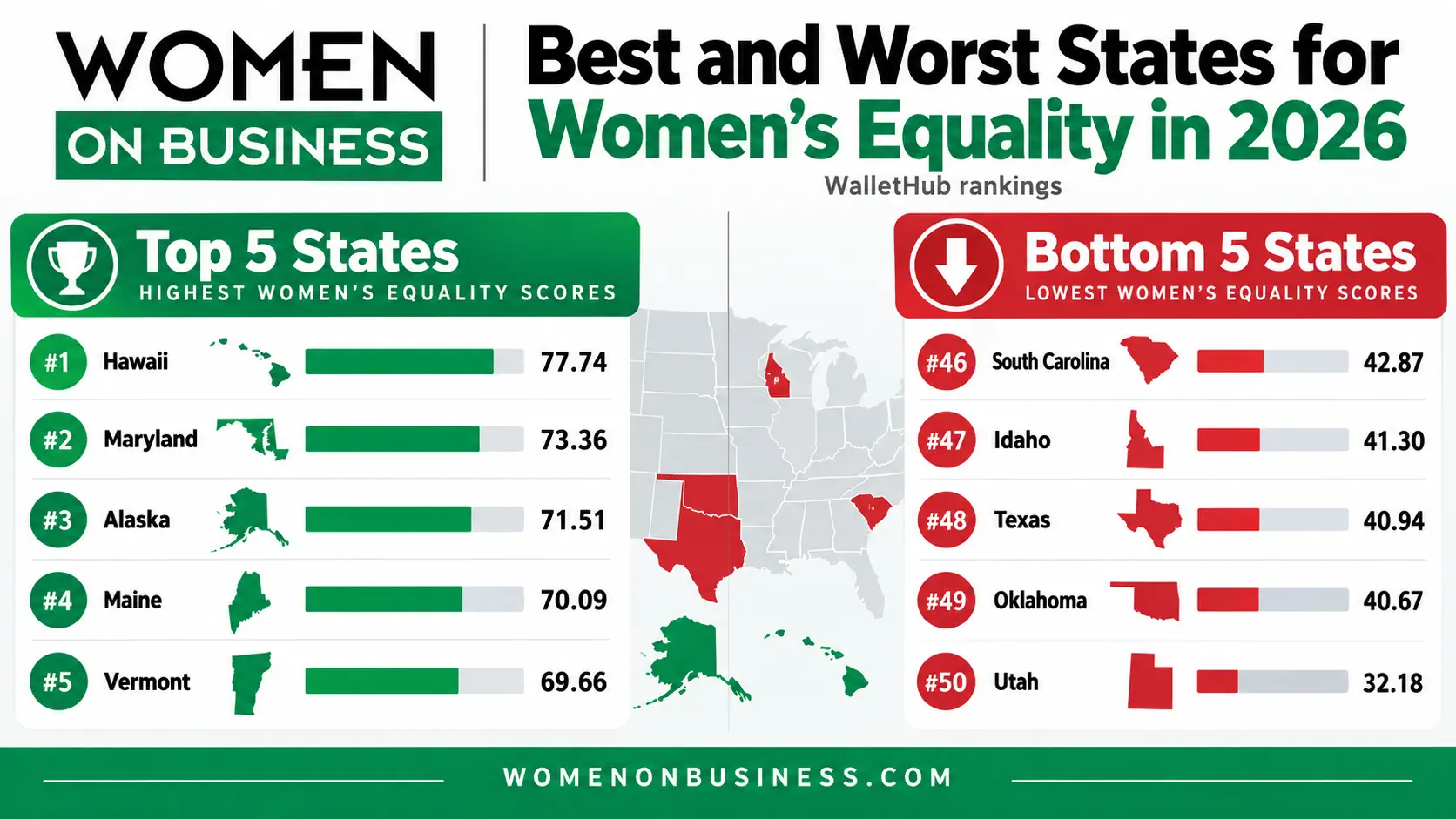
Hawaii earned the highest overall score of 77.74, compared with just 32.18 for Utah. That’s a difference of more than 45 points on WalletHub’s 100-point scale.
However, these scores measure relative equality across several categories. They don’t mean women in Hawaii experience complete equality or that every woman in Utah faces the same disadvantages.
More importantly, the overall rankings don’t tell the entire story about women’s experiences at work.
The Gender Pay Gap Remains a Serious Problem
One of the most revealing findings from WalletHub’s research concerns income inequality.
The states with the smallest income gaps between women and men are Maryland, Vermont, Illinois, Connecticut, California, and Maine, with California and Maine tied for fifth.
At the other end of the rankings, Utah has the largest income gap, followed by New Hampshire, Virginia, Washington, and Idaho.
The financial consequences of earning less extend far beyond your next paycheck.
Lower earnings can affect your retirement contributions, Social Security benefits, emergency savings, and ability to invest. For women who own businesses, income inequality can also influence how much personal capital they’re able to accumulate before launching or expanding a company.
The national statistics reinforce the problem.
According to the U.S. Bureau of Labor Statistics, women working full time earned median weekly wages of $1,089 in 2025, compared with $1,326 for men.
That means women’s median weekly earnings were only 82.1% of men’s earnings.
The figures represent an overall earnings comparison, rather than a comparison of women and men performing identical jobs with identical qualifications. Differences in occupations, working hours, experience, and other factors contribute to the gap.
Nevertheless, the continued disparity demonstrates how far the country remains from economic parity.
Women Are Still Missing from Executive Leadership
One of the most interesting findings in WalletHub’s 2026 report is where executive inequality is most pronounced.
Massachusetts has the largest gender gap in executive positions, followed by New York, Utah, Connecticut, and New Jersey.
Meanwhile, Iowa, Alaska, Wyoming, New Mexico, and West Virginia have the smallest gaps.
Think about what that means. A state can have a highly educated workforce, major corporations, and strong economic opportunities but still have a substantial disparity between women and men in executive positions.
Massachusetts provides an especially interesting example. Although it ranks 13th overall for women’s equality, it ranks last for executive position equality.
And that raises an important question for employers: Are women being given the same opportunities to reach positions where major business decisions are made?
National research suggests that significant barriers remain.
The 2025 Women in the Workplace report from McKinsey and LeanIn.Org found that women hold just 29% of C-suite positions.
Women’s representation also decreases at successive levels of corporate leadership.
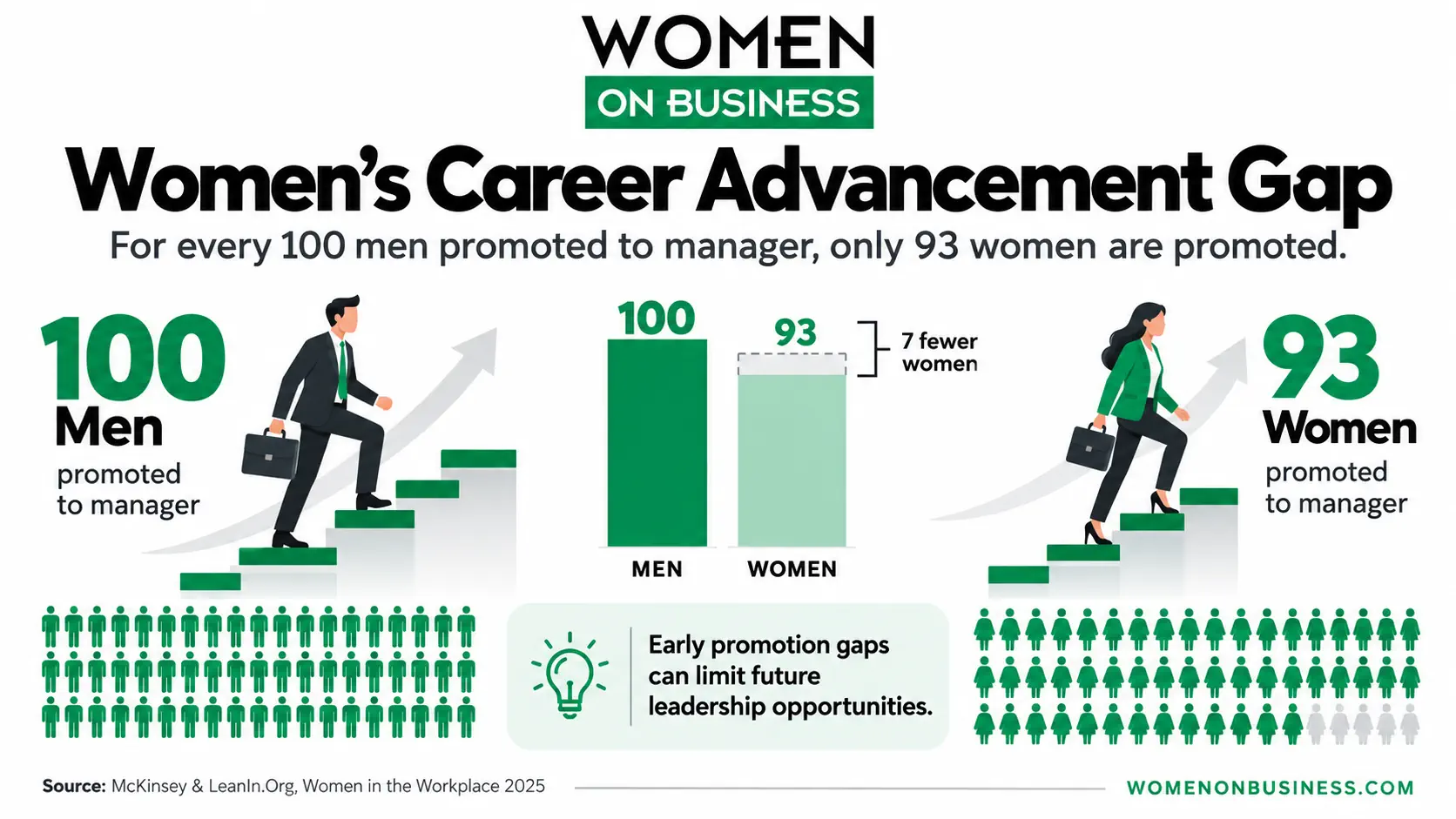
Even more concerning, the research found that for every 100 men promoted to their first management position, only 93 women received similar promotions.
The gap is particularly severe for women of color. For every 100 men promoted to management, only 60 Black women and 82 Latinas received promotions.
These early promotion differences can affect women’s career trajectories for decades. Fewer women advancing into management today means fewer women positioned to compete for senior executive roles tomorrow.
Even States with Strong Overall Rankings Have Workplace Inequality
WalletHub’s findings reveal another important lesson. A high overall gender equality ranking doesn’t guarantee a particularly equitable workplace.
Consider these results.
- Hawaii ranks first overall and first for workplace environment.
- Maryland ranks second overall and third for workplace environment.
- Vermont ranks fifth overall and second for workplace environment.
- Michigan ranks 12th overall but falls to 39th for workplace environment.
- Massachusetts ranks 13th overall but only 33rd for workplace environment.
- Washington ranks 19th overall but 34th for workplace environment.
These differences demonstrate why looking only at a state’s overall ranking can be misleading.
For women deciding where to pursue careers, accept job offers, start businesses, or relocate, workplace-specific data may be more useful than an overall quality-of-life ranking.
For employers, the findings should encourage a closer examination of compensation practices, leadership development, and advancement opportunities within their organizations.
A company’s location doesn’t determine whether it treats women fairly. Its decisions do.
Gender Inequality Can Also Influence Women’s Career Ambitions
Persistent workplace inequality has consequences beyond compensation and job titles.
According to McKinsey and LeanIn.Org’s 2025 research, 80% of women wanted to advance to the next level of their careers, compared with 86% of men.
At first glance, that could suggest women are becoming less ambitious. However, the researchers found that the difference disappeared when women and men received comparable career support.
Women were less likely to receive sponsorship and advocacy from senior colleagues, both of which can influence promotion opportunities. For example, only 31% of entry-level women reported having a sponsor, compared with 45% of entry-level men.
Imagine working hard, consistently meeting expectations, and watching colleagues receive development opportunities that never come your way. Over time, it’s understandable that your enthusiasm for pursuing a promotion could change.
These findings should make business leaders reconsider how they identify leadership potential, distribute high-visibility assignments, and support women who want to advance with career advancement strategies.
What Can Businesses Do to Improve Gender Equality?
The research results point to several areas where organizations can make meaningful improvements.
Review compensation practices.
Conduct regular pay equity analyses, investigate unexplained disparities, and establish consistent compensation criteria.
Evaluate promotion decisions.
Examine who receives promotions, high-profile assignments, leadership training, and opportunities to manage teams. Look for patterns that might indicate unequal access.
Create meaningful sponsorship opportunities.
Mentorship offers valuable advice, but sponsorship connects employees with influential leaders willing to advocate for their advancement.
Measure leadership representation.
Track women’s participation at different management levels, and identify where advancement slows.
Hold leaders accountable.
Establish measurable expectations for fair hiring, performance evaluations, compensation, and promotions.
The Bottom Line for Women in Business
WalletHub’s 2026 findings show that progress toward gender equality remains uneven. Women in some states face substantially greater disparities in earnings, leadership representation, and other opportunities. And even states that perform well overall can fall short when workplace equality is examined separately.
When national research shows women still earn considerably less than men overall and occupy fewer than one-third of C-suite positions, it’s difficult to argue that the workplace equality problem has been solved.
The real measure of progress will be whether women have comparable opportunities to earn, advance, lead, and succeed throughout their careers. That requires more than recognizing inequality. It requires businesses to examine their own practices and make measurable changes.
If you’re a woman building your career, use this research to ask more informed questions about prospective employers. Look beyond public statements about equality and investigate how organizations actually promote and compensate employees.
Frequently Asked Questions About Women’s Equality in 2026
What is the best state for women’s equality in 2026?
Hawaii ranks first in WalletHub’s 2026 Best & Worst States for Women’s Equality report, with an overall score of 77.74. It also ranks first for workplace environment and political empowerment.
What is the worst state for women’s equality in 2026?
Utah ranks last among the 50 states, with an overall score of 32.18. It also has the largest gender income gap in WalletHub’s comparison and ranks 47th for workplace environment.
Which state has the smallest gender pay gap?
Maryland has the smallest income disparity between women and men in WalletHub’s 2026 analysis, followed by Vermont, Illinois, and Connecticut. The ranking measures median weekly earnings disparities.
Which states have the largest gender gaps in executive leadership?
Massachusetts, New York, Utah, Connecticut, and New Jersey have the largest disparities in executive representation, according to WalletHub’s 2026 findings.
How much do women earn compared with men in 2026?
The latest annual figures from the Bureau of Labor Statistics show that women working full time earned 82.1% of men’s median weekly earnings in 2025. The data was released in January 2026.
Why does gender inequality in the workplace still exist?
Workplace gender inequality involves multiple factors, including occupational differences, caregiving responsibilities, unequal access to career development, promotion disparities, and potential bias in employment decisions. Research from McKinsey and LeanIn.Org shows that women continue to receive fewer career advancement opportunities and remain underrepresented in corporate leadership.
