
Employers consistently identify in-demand soft skills among the most important qualities they look for in candidates and employees. Recent research confirms that communication, problem-solving, adaptability, and collaboration are especially valuable.
Yet simply listing these abilities on your resume or mentioning them during a performance review isn’t enough to demonstrate your value. To advance your career, you need to understand which soft skills employers want and how to prove you have them.
Key Takeaways
- Communication, problem-solving, and adaptability are the three most valued skills in the Graduate Management Admission Council’s 2026 survey of corporate recruiters.
- ManpowerGroup’s 2026 research found that 39% of employers identify communication, collaboration, and teamwork among their most sought-after soft skills.
- Employers want evidence of your abilities, including specific examples of how you’ve used soft skills to achieve business results.
- Documenting accomplishments, gathering feedback, and communicating your contributions can help you demonstrate your value when pursuing jobs and promotions.
- As artificial intelligence becomes more common in business, combining technical proficiency with strong interpersonal skills can help you stand out.
What Research Reveals About the Soft Skills Employers Want
Technical expertise might qualify you for a position, but employers also want to know how you’ll work with others, handle challenges, and contribute to their organizations.
The Graduate Management Admission Council’s (GMAC) 2026 Corporate Recruiters Survey, which gathered responses from more than 600 corporate recruiters and hiring managers worldwide, identified the following skills as the three most valued when hiring business school graduates.
- Communication Skills: 64%
- Problem-solving Skills: 62%
- Adaptability: 60%
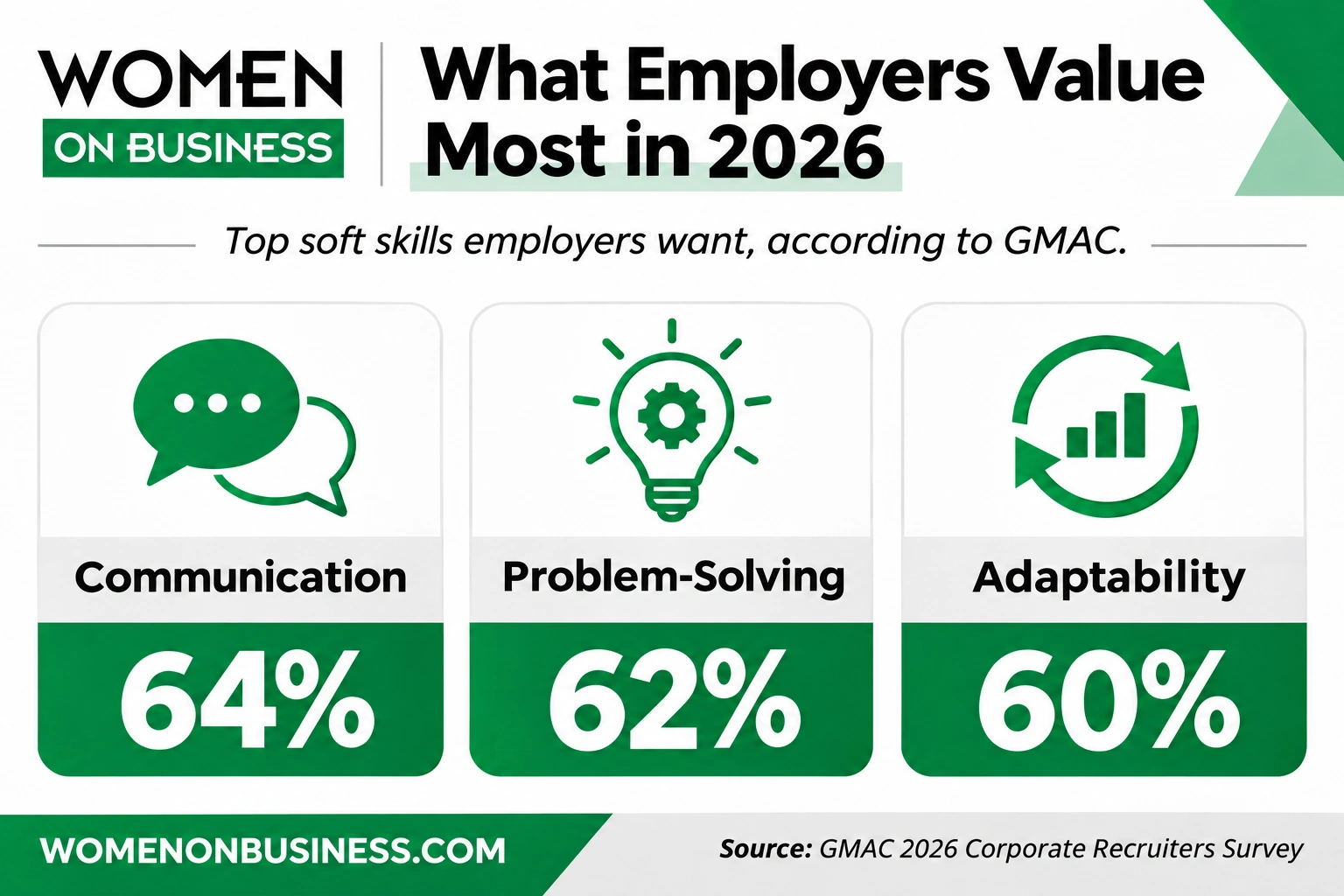
Interestingly, the ability to use AI tools ranked 14th at 50%. This doesn’t mean AI proficiency is unimportant. Instead, it demonstrates that employers continue to prioritize capabilities that help people apply their knowledge effectively.
The findings extend beyond business school recruitment. ManpowerGroup’s 2026 Global Talent Shortage Survey, which included more than 39,000 employers across 41 countries, found that the most sought-after soft skills were:
- Communication, Collaboration, and Teamwork: 39%
- Professionalism and Work Ethic: 36%
- Adaptability and Willingness to Learn: 34%
Meanwhile, the National Association of Colleges and Employers’ (NACE) Job Outlook 2026 Spring Update found that employers want job applicants to provide evidence of teamwork, problem-solving, and communication skills.
There’s an important lesson in these findings. Employers value soft skills, but they also want to see how you’ve applied them.
8 In-Demand Soft Skills and How to Demonstrate Them
The following eight skills are supported by recent employer research. For each one, consider how you can connect your abilities to specific workplace accomplishments.
1. Communication
Effective communication influences nearly every business function—from customer relationships to project execution. Employers need people who can explain ideas clearly, listen carefully, and adjust their messages for different audiences.
How to Prove It:
Think about a time your communication improved an outcome. Perhaps you explained a complicated process that reduced employee errors, delivered a presentation that secured executive approval, or improved customer communications that increased satisfaction.
Instead of writing “excellent communication skills” on your resume, describe what your communication accomplished.
2. Problem-Solving
Employers value professionals who can recognize problems, investigate causes, evaluate options, and recommend practical solutions.
You don’t need to solve an organization-wide crisis to demonstrate this skill. Identifying an inefficient process or resolving a recurring customer complaint can provide equally useful evidence.
How to Prove It:
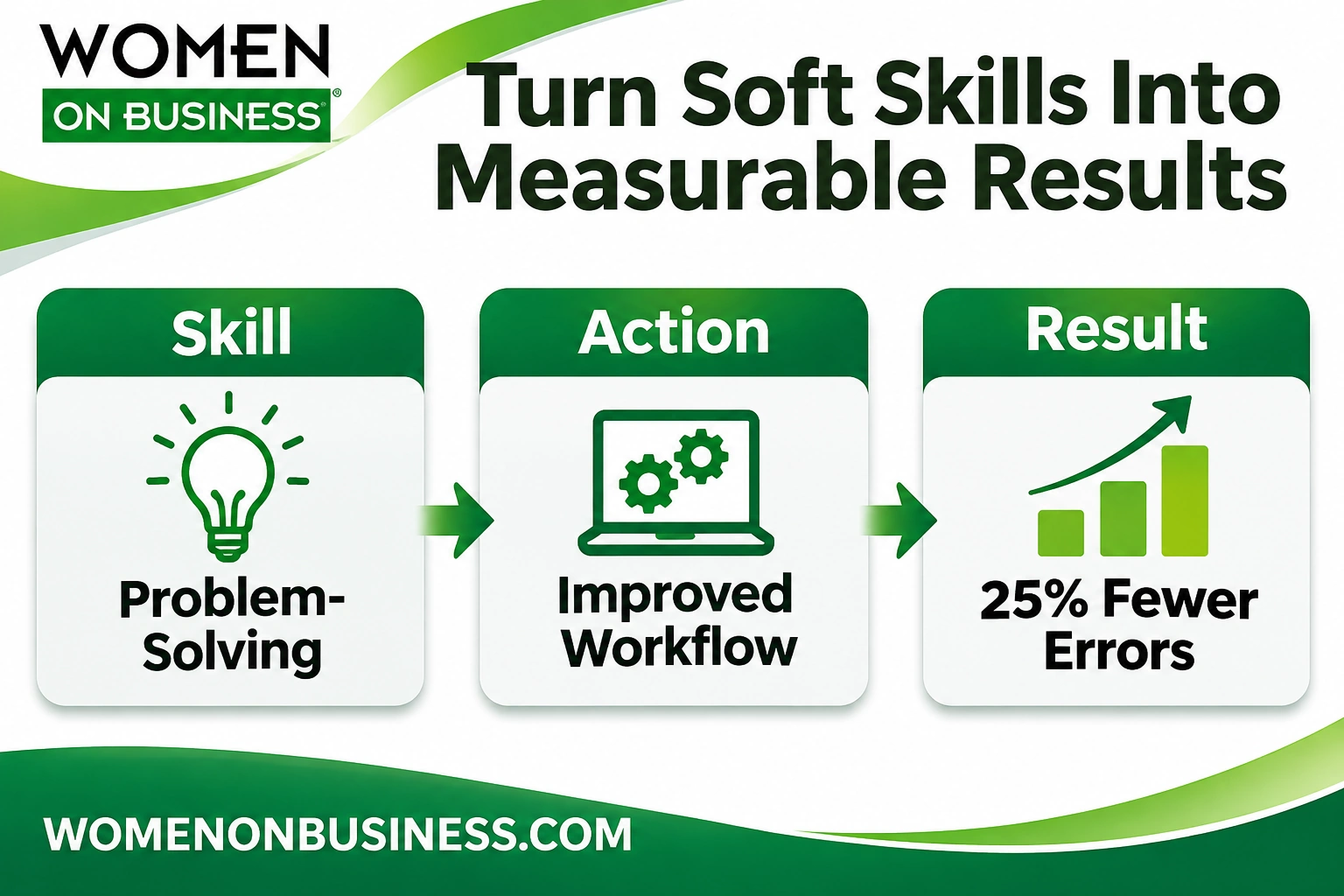
Describe the problem, explain your contribution, and share the result. For example, “Identified a recurring order-processing issue and developed a revised workflow that reduced errors by 25%.”
Whenever possible, connect your problem-solving abilities to improvements in productivity, quality, revenue, or costs.
3. Adaptability
Business priorities change. New technologies emerge, budgets fluctuate, and companies reorganize. Employers need people who can respond productively without allowing uncertainty to derail their work.
Adaptability is particularly important as organizations adopt new technologies and change how employees complete their responsibilities.
How to Prove It:
Share an example of successfully managing a transition, learning a new system, or adjusting a project when circumstances changed. Explain how your response helped maintain or improve performance.
4. Teamwork and Collaboration
Most business results depend on people working together. Even when you’re responsible for an individual project, you probably need information, cooperation, or approval from others.
Strong collaboration requires understanding different perspectives, communicating expectations, and contributing to shared goals.
How to Prove It:
Focus on your contribution to a team accomplishment. For example, you might describe coordinating employees from three departments to launch a project two weeks ahead of schedule.
Be careful about minimizing your role by discussing only what the team accomplished. Your individual contribution deserves recognition.
5. Critical Thinking and Decision-Making
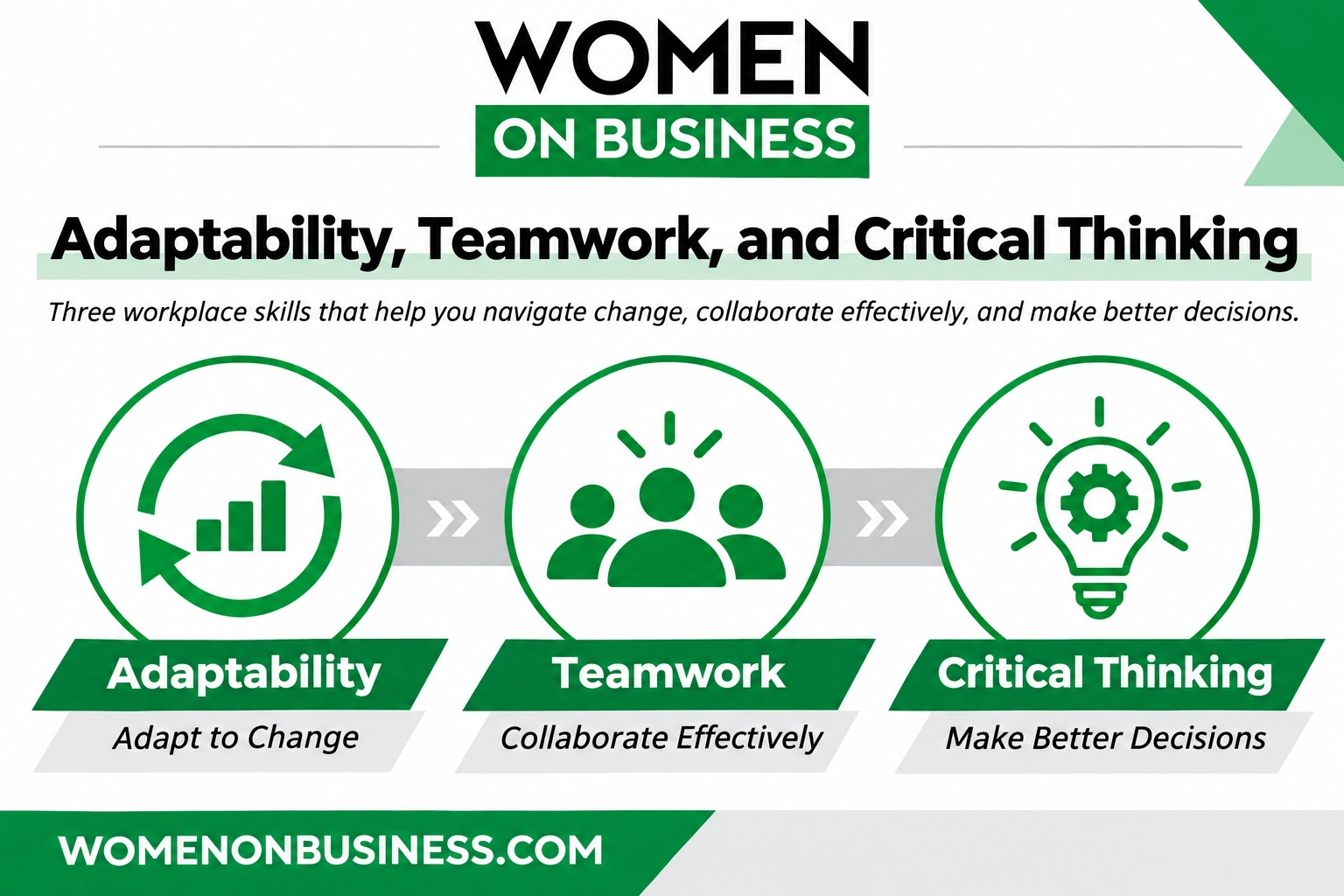
Employers need people who can evaluate information, recognize risks, and make sound decisions. These capabilities become especially useful when decisions involve incomplete information or competing business priorities.
AI tools can help gather and analyze information, but you still need to assess whether the findings are accurate, relevant, and appropriate for the situation.
How to Prove It:
Explain a decision you made, the information you considered, and the resulting business impact. Demonstrating your reasoning can be just as valuable as describing the outcome.
6. Leadership
You don’t need a management title to demonstrate leadership. Taking responsibility for an initiative, mentoring a colleague, or helping others navigate a difficult situation can all show leadership potential.
Employers also want leaders who can establish priorities, build trust, and maintain accountability.
How to Prove It:
Describe situations where you influenced results or helped other people succeed. Include measurable outcomes when available, such as improved employee retention, faster project completion, or stronger team performance.
For more guidance, read 12 Characteristics of a Manager and a Leader that Support Career Success.
7. Emotional Intelligence
Emotional intelligence helps you recognize and manage emotions, understand other people’s perspectives, and respond appropriately during challenging interactions.
It’s particularly useful when resolving disagreements, providing feedback, managing customer relationships, and leading teams.
How to Prove It:
Consider an example where you successfully navigated a difficult conversation, resolved a conflict, or supported a colleague through a challenging situation.
Focus on what you did and the result rather than simply claiming you’re empathetic or good with people.
8. Professionalism and Work Ethic
Reliability, accountability, and sound judgment influence whether colleagues and managers trust you with important responsibilities.
ManpowerGroup’s 2026 research identified professionalism and work ethic as the second most sought-after category of soft skills among surveyed employers.
How to Prove It:
Provide examples of consistently meeting commitments, handling sensitive responsibilities, maintaining quality standards, or taking ownership of problems.
For instance, successfully managing competing deadlines while maintaining client satisfaction demonstrates more than describing yourself as dependable.
How to Make Your In-Demand Soft Skills More Visible at Work
Knowing which soft skills employers value is useful. Making sure your contributions are recognized is another challenge. You might spend months helping colleagues, managing difficult clients, or preventing problems without anyone fully understanding the value you’ve created.
This can become particularly frustrating when promotion opportunities arise. If you’re hoping to advance, consider the following strategies.
Keep a Record of Your Accomplishments
Maintain a document that tracks important projects, challenges, actions, and results. Update it regularly rather than trying to remember everything when your annual performance review approaches.
Include numbers when they’re available, but don’t overlook meaningful qualitative results. Positive client feedback, successful conflict resolution, and improvements in team communication also provide evidence of your contributions.
Use Specific Examples in Interviews and Reviews
When discussing your skills, describe the situation, your actions, and the outcome.
For example, saying “I’m good at teamwork” offers little evidence, but explaining how you brought together colleagues with competing priorities to complete a critical project tells a much stronger story.
Prepare several examples before job interviews and performance discussions so you can confidently explain your accomplishments.
Ask for Feedback and Recommendations
Managers, colleagues, and clients can provide valuable insight into how others perceive your strengths.
Ask for specific feedback about your communication, judgment, reliability, or leadership. You can also request professional recommendations that validate your abilities.
As explained in How LinkedIn Recommendations Can Help Your Career and Business, recommendations can strengthen your professional credibility by providing independent evidence of your experience and accomplishments.
Connect Your Skills to Business Priorities
Think about what your employer needs to achieve. If reducing costs is a priority, explain how your problem-solving improved efficiency. If customer retention is important, demonstrate how your communication or relationship-building helped improve customer experiences.
Making these connections helps managers understand your contributions in terms of organizational goals.
Of course, demonstrating your skills doesn’t guarantee fair recognition or advancement. Women can face additional obstacles, including unequal access to opportunities and promotion bias. The strategies in 10 Career Advancement Strategies for Women to Move Ahead at Work can help you advocate for your professional growth.
Frequently Asked Questions About In-Demand Soft Skills
What are the most in-demand soft skills employers want?
Recent employer research consistently identifies communication, problem-solving, adaptability, collaboration, and professionalism among the most sought-after soft skills. Leadership, decision-making, and emotional intelligence are also valuable in many business roles.
How can you prove soft skills on a resume?
Use specific accomplishments that demonstrate how you’ve applied your skills. Describe actions and outcomes rather than relying on general statements such as “strong communicator” or “excellent team player.” Include measurable results whenever possible.
How do employers evaluate soft skills during interviews?
Employers often use behavioral interview questions that ask candidates to describe past experiences. They may also use situational questions, assessments, or work samples. Prepare examples that demonstrate how you’ve handled challenges, collaborated with others, and achieved results.
Are soft skills still important as AI becomes more common?
Yes. AI can support many business activities, but employees still need communication, judgment, adaptability, and interpersonal skills to apply technology effectively. You can learn more in 10 Human Skills AI Can’t Replace and How to Improve Them.
Your In-Demand Soft Skills Have Value
The latest research confirms that employers place significant value on capabilities that help people work effectively and achieve business goals.
Whether you’re searching for a new position, pursuing a promotion, or preparing for greater leadership responsibilities, take time to identify your strongest soft skills and gather evidence of how you’ve used them.
The more clearly you can communicate what you’ve contributed, the better prepared you’ll be to pursue your next career opportunity.
