
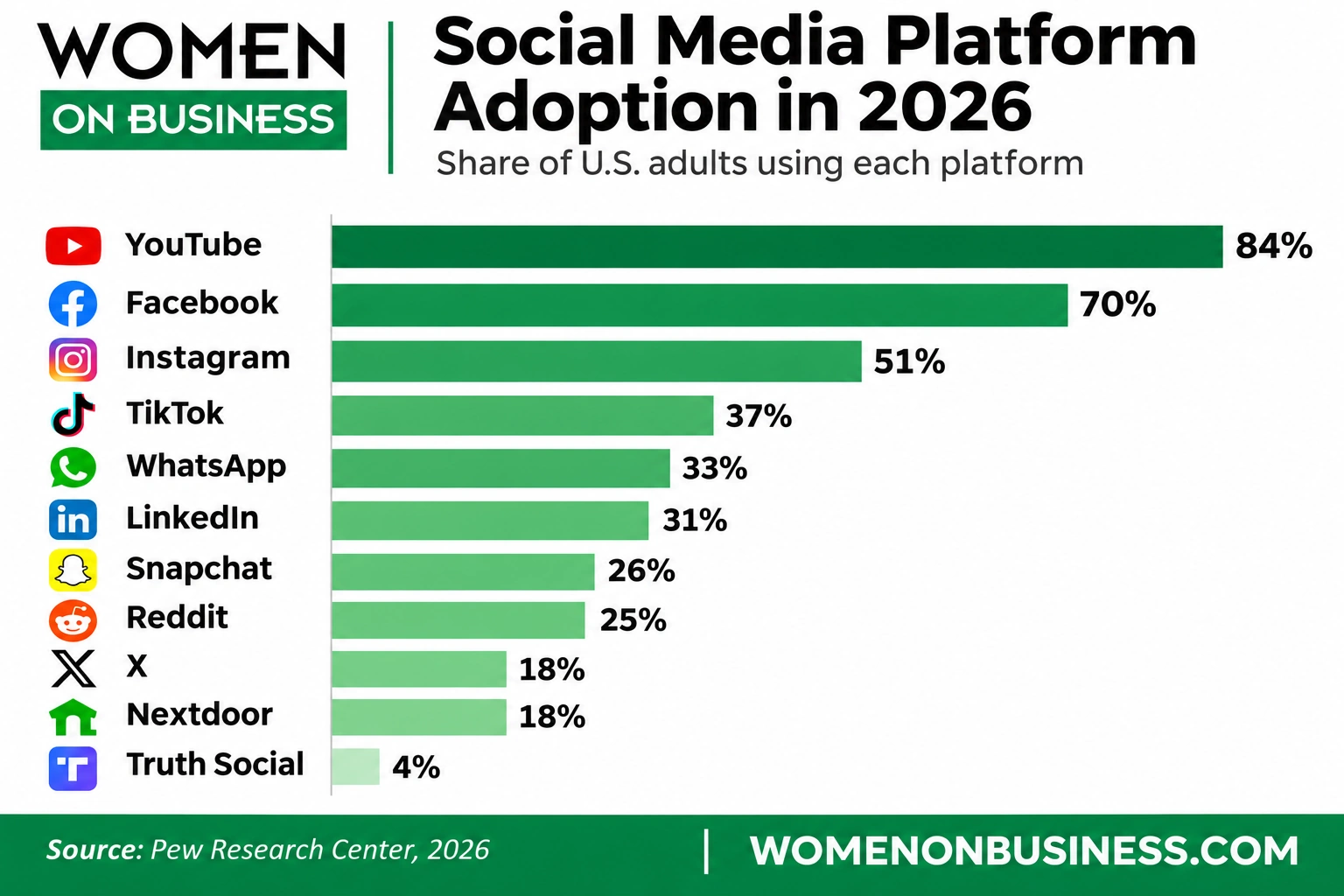
Social media marketing has changed significantly over the past decade. Instagram has grown into a mainstream platform, TikTok has attracted millions of American adults, and YouTube reaches people across nearly every demographic group. Yet Facebook, a platform that some marketers dismiss as outdated, continues to reach more than two-thirds of American adults.
If you’re a business owner or marketer trying to decide where to spend your social media marketing budget, those differences can make or break a campaign. Choosing the wrong platforms can leave you spending hundreds or thousands of dollars reaching people who are unlikely to become customers.
Fortunately, the Pew Research Center’s 2026 social media study provides valuable insights into which platforms Americans use, how adoption has changed over the past deace, and where different demographic groups spend their time.
Let’s examine the findings, particularly the differences among women and age groups, and what they mean for your marketing strategy.
Key Takeaways
- YouTube and Facebook have the broadest reach. In 2026, 84% of U.S. adults use YouTube and 70% use Facebook, making them important platforms to evaluate for businesses targeting a broad audience.
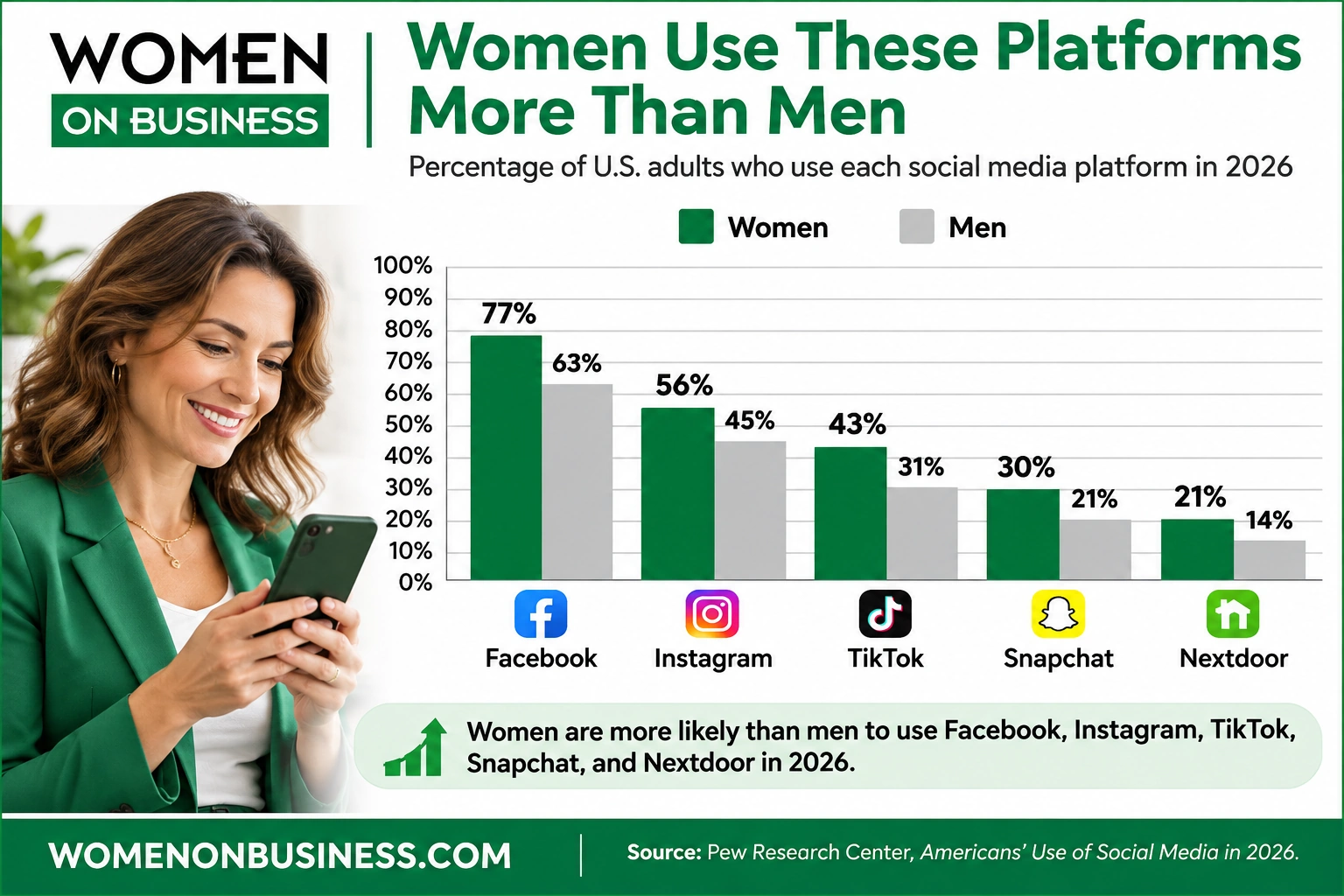
- Facebook remains particularly popular among women. Approximately 77% of American women use Facebook, compared with 63% of men.
- Instagram and TikTok have become important channels for reaching women. Instagram reaches 56% of women, while TikTok reaches 43%.
- Age significantly influences platform adoption. Instagram, TikTok, and Snapchat are especially popular among younger adults, while Facebook and YouTube maintain substantial audiences among older consumers.
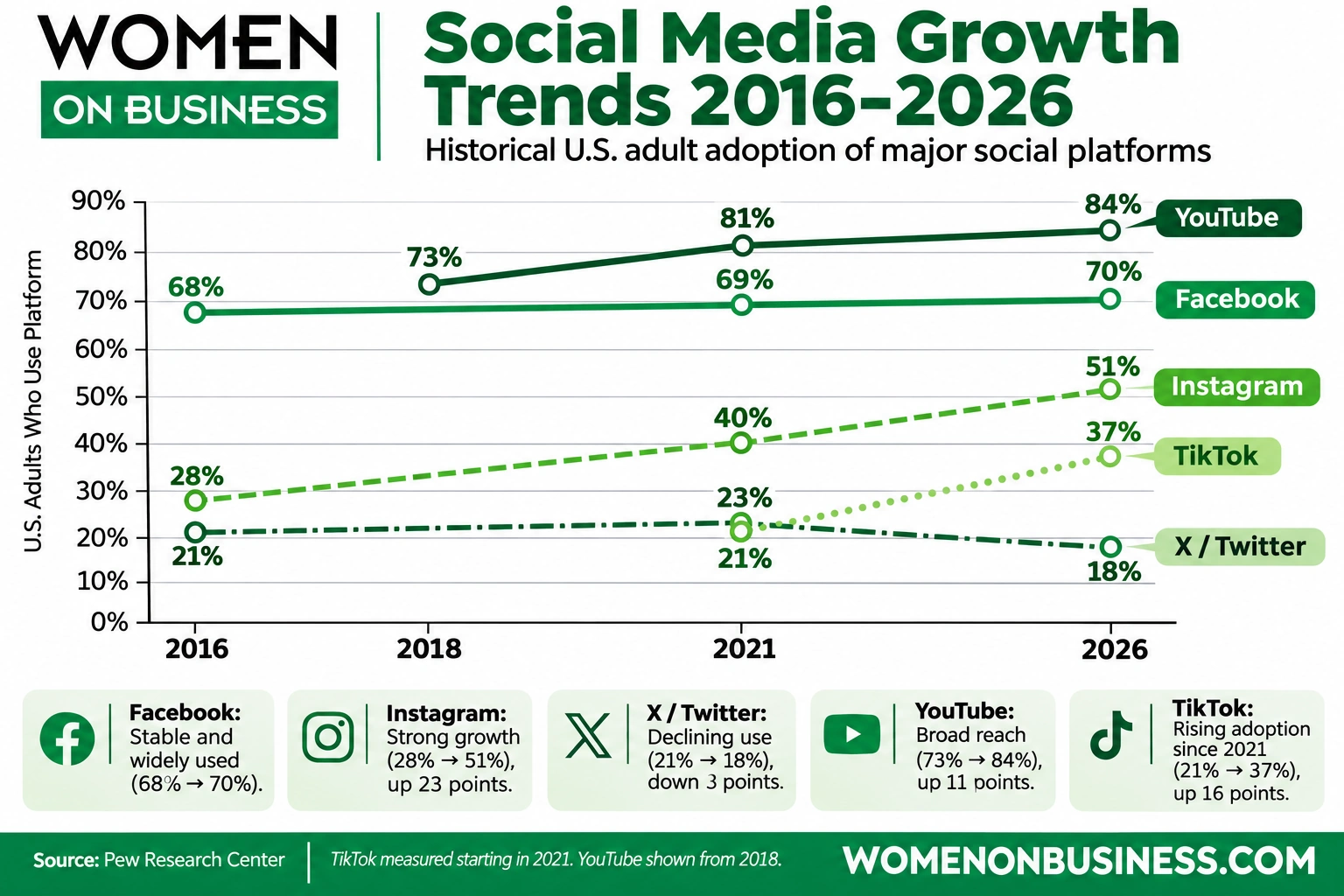
- Instagram has experienced impressive long-term growth. Its adoption among U.S. adults increased from 28% in 2016 to 51% in 2026.
- Audience size doesn’t guarantee marketing success. The best platforms for your business are those that reach your ideal customers and help you achieve measurable marketing goals.
How Social Media Platform Popularity Has Changed Over the Past Decade
One of the most interesting findings from Pew Research’s historical data is how differently social media platforms have evolved.
Some have experienced dramatic growth, while others have maintained relatively consistent adoption rates. These trends challenge several common assumptions about where marketers should focus their attention.
The following table compares the percentage of U.S. adults who reported using selected social media platforms in 2016, 2021, and 2026.
|
Social Media Platform |
2016 |
2021 |
2026 |
|
YouTube |
N/A |
81% |
84% |
|
|
68% |
69% |
70% |
|
|
28% |
40% |
51% |
|
TikTok |
N/A |
21% |
37% |
|
|
25% |
28% |
31% |
|
|
N/A |
23% |
33% |
|
Snapchat |
N/A |
25% |
26% |
|
|
N/A |
18% |
25% |
|
X (formerly Twitter) |
21% |
23% |
18% |
Source: Pew Research Center’s historical social media adoption data. N/A indicates that Pew didn’t collect comparable platform data for that year. Percentages represent all U.S. adults, and survey methodology changed over time.
Instagram Has Become a Mainstream Social Media Platform
Instagram’s growth is one of the clearest long-term trends in the research. In 2016, just 28% of American adults used Instagram. That increased to 40% in 2021 and 51% in 2026. Over the decade, Instagram gained 23 percentage points in overall adult adoption.
That expansion creates opportunities for businesses in industries where visual content helps customers evaluate products, services, or experiences.
For example, a home decorating business can demonstrate design ideas, a fitness instructor can share educational videos, and a professional services provider can establish credibility through helpful content.
Instagram’s audience has also expanded beyond younger consumers, although age differences remain substantial.
If you’ve been treating Instagram primarily as a platform for teenagers and young adults, it’s worth reevaluating that assumption. As I discussed in How to Boost Sales on Instagram, connecting your content to a clear path toward purchasing is essential if your goal is to generate sales.
Facebook Remains Remarkably Resilient
Facebook’s adoption has been surprisingly consistent. According to Pew Research’s 2016 study, 68% of American adults used Facebook. That figure reached 69% in 2021 and 70% in 2026.
Despite the emergence of numerous competing platforms, Facebook continues to reach a large percentage of the U.S. adult population. For businesses targeting women, middle-aged consumers, or older adults, that reach is particularly valuable.
Of course, a large audience doesn’t mean your organic Facebook posts will automatically reach potential customers. Organic visibility, advertising performance, and customer engagement are separate considerations.
However, abandoning Facebook simply because it’s an older platform could mean overlooking a substantial portion of your target audience.
TikTok’s Growth Has Been Significant
TikTok was included in Pew’s social media adoption research in 2021, when 21% of U.S. adults reported using the platform. By 2023, adoption had reached 33%, and it increased to 37% in 2025. The 2026 figure remained at 37%.
The lack of additional growth in the latest survey doesn’t establish that TikTok has stopped expanding permanently. However, it does suggest that businesses should evaluate the platform based on its current audience and performance rather than assuming its rapid growth will continue indefinitely.
TikTok’s popularity also extends beyond the youngest adults, which we’ll examine later.
YouTube Has the Broadest Reach
YouTube’s adoption increased from 73% of American adults in 2018 to 84% in 2026. That makes it the most widely used platform included in Pew’s latest research.
For marketers, YouTube offers opportunities to publish tutorials, demonstrations, educational videos, customer stories, and other content that supports purchasing decisions.
YouTube content can also remain discoverable long after publication, particularly when videos address subjects people actively search for.
If your products or services require explanation before someone is ready to buy, YouTube definitely deserves consideration as part of your marketing strategy.
X Has Experienced a Decline in Adoption
The percentage of American adults using X, formerly Twitter, declined from 23% in 2021 to 18% in 2026. That doesn’t mean businesses should automatically stop using the platform. Some industries, professional communities, and audiences remain active there.
Instead, this trend reinforces the importance of regularly reviewing your social media strategy. The platform that helped you build an audience five years ago might no longer provide the same opportunities today.
Best Social Media Platforms for Marketing to Women in 2026
If women are your primary target customers, the latest Pew Research data offers several useful insights. Women are more likely than men to use Facebook, Instagram, TikTok, Snapchat, and Nextdoor. However, the size of each platform’s female audience varies considerably.
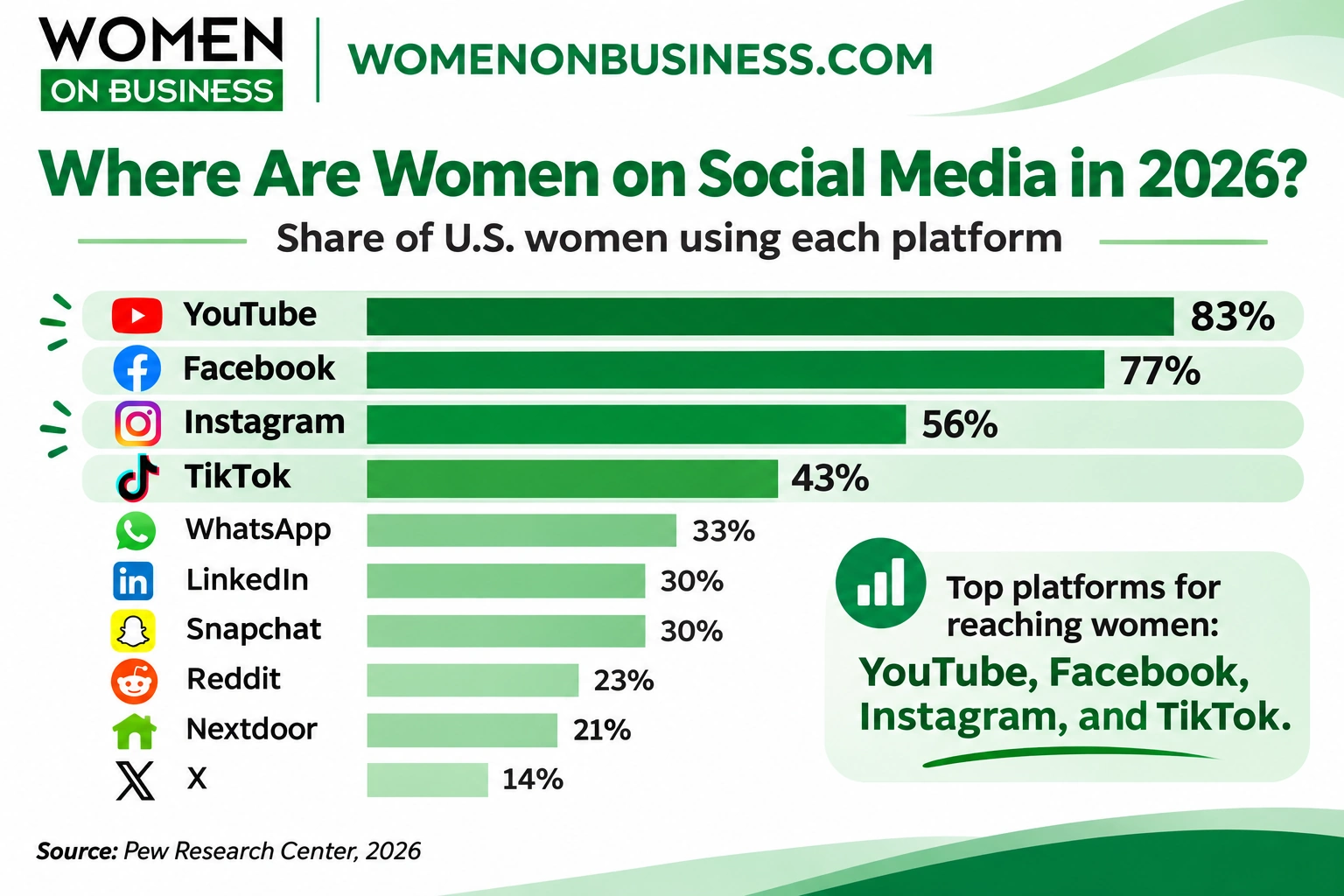
The table below compares the share of American women and men using social media platforms in 2026.
|
Platform |
Women |
Men |
Difference |
|
YouTube |
83% |
85% |
-2 points |
|
|
77% |
63% |
+14 points |
|
|
56% |
45% |
+11 points |
|
TikTok |
43% |
31% |
+12 points |
|
|
33% |
34% |
-1 point |
|
|
30% |
32% |
-2 points |
|
Snapchat |
30% |
21% |
+9 points |
|
|
23% |
27% |
-4 points |
|
Nextdoor |
21% |
14% |
+7 points |
|
X |
14% |
23% |
-9 points |
Source: Pew Research Center, 2026. Positive differences indicate higher adoption among women. These percentages measure the share of women or men who use each platform, not the gender composition of each platform’s total audience.
Facebook Is Still One of the Strongest Platforms for Reaching Women
Approximately 77% of American women use Facebook, compared with 63% of men. That 14-percentage-point difference is the largest female advantage among the platforms Pew measured in 2026.
For businesses selling products and services to women, Facebook should definitely be part of your strategy evaluation, particularly when targeting adults in their thirties, forties, fifties, and beyond.
Facebook’s advertising tools, business pages, and community groups provide several ways to connect with potential customers. Consider a local salon targeting women ages 40 to 65. Facebook could offer more relevant reach than Snapchat, even if Snapchat receives considerable attention in discussions about social media trends.
The right decision comes from understanding your customers rather than choosing the most talked-about platform.
Instagram and TikTok Are Important for Reaching Women
More than half of American women use Instagram, while 43% use TikTok. Both platforms also have meaningfully higher adoption among women than men.
Instagram’s visual formats can be especially useful for businesses that want to demonstrate products, share customer experiences, and build relationships through educational or entertaining content.
TikTok offers opportunities for short-form video, product discovery, and reaching audiences through engaging content. However, creating effective videos requires time, creativity, and consistency.
You should consider whether your business can realistically maintain the type of content each platform requires before committing significant resources.
YouTube Shouldn’t Be Overlooked
YouTube reaches 83% of American women, making it the platform with the highest overall adoption among women in Pew’s research. Interestingly, slightly more men than women use YouTube, but that difference shouldn’t distract from its substantial female audience.
A business selling financial education, professional development services, home improvement products, or wellness-related services could use YouTube videos to explain complicated topics and build trust with prospective customers.
The key is understanding what your audience wants to learn and creating videos that address those needs.
Best Social Media Platforms for Different Age Groups in 2026
Gender is only part of the picture. Age can dramatically change which social media platforms are most useful for reaching your ideal customers.
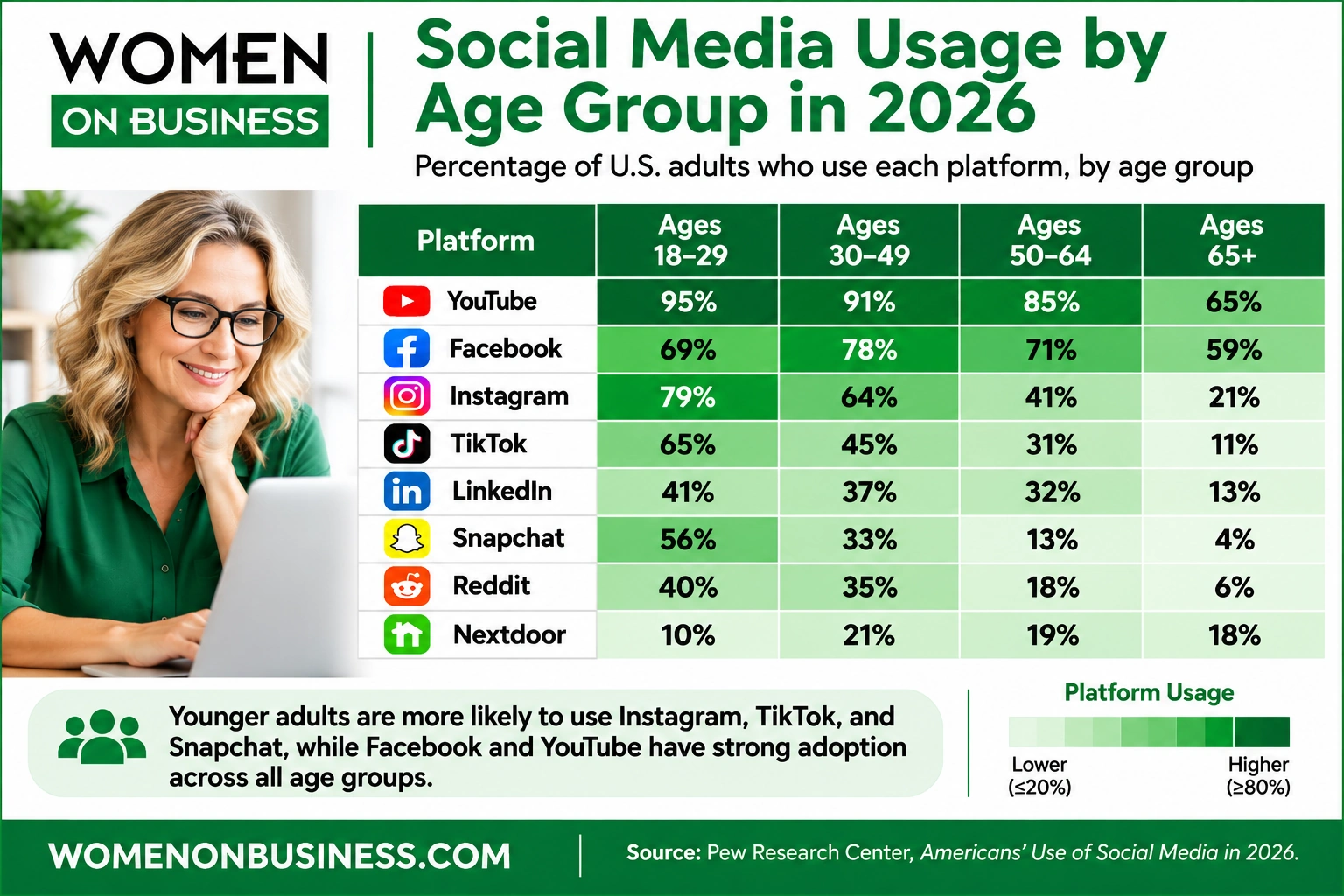
The 2026 Pew data reveals significant differences in adoption across four adult age groups.
|
Platform |
Ages 18–29 |
Ages 30–49 |
Ages 50–64 |
Ages 65+ |
|
YouTube |
95% |
91% |
85% |
65% |
|
|
69% |
78% |
71% |
59% |
|
|
79% |
64% |
41% |
21% |
|
TikTok |
65% |
45% |
31% |
11% |
|
|
41% |
37% |
32% |
13% |
|
Snapchat |
56% |
33% |
13% |
4% |
|
|
40% |
35% |
18% |
6% |
|
Nextdoor |
10% |
21% |
19% |
18% |
Source: Pew Research Center, 2026. Percentages represent the share of U.S. adults within each age group who use each platform.
Ages 18–29: YouTube, Instagram, and TikTok Lead
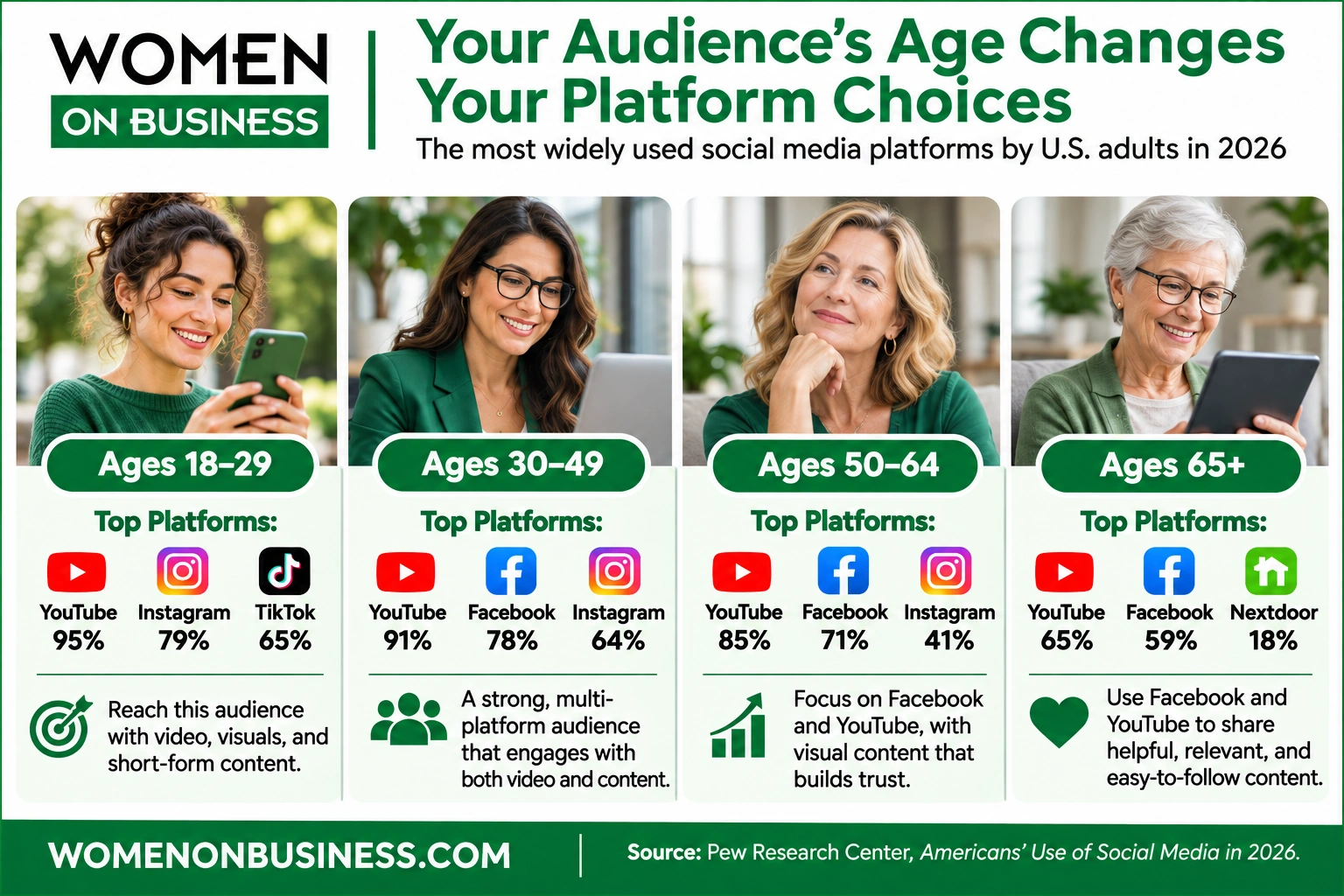
Among Americans ages 18 to 29, YouTube reaches an impressive 95%, followed by Instagram at 79% and TikTok at 65%. Snapchat also attracts a significant portion of this audience, with 56% reporting that they use the platform.
If you’re marketing to college students, young professionals, or consumers in their twenties, video should be an important consideration in your content strategy. However, reaching these audiences requires understanding what motivates them to engage with your content.
A video that looks appealing may generate views without producing meaningful interest in your products. For example, a business selling career development services to recent college graduates could test educational videos on YouTube and Instagram before investing in a larger campaign.
Ages 30–49: Facebook Remains a Leader
One of the more surprising findings is that Facebook reaches 78% of American adults ages 30 to 49. That’s higher than Instagram at 64% and TikTok at 45%. YouTube has even broader adoption at 91%.
For businesses targeting this age group, Facebook and YouTube offer substantial potential reach, while Instagram provides another valuable option.
This is particularly relevant for companies selling professional services, financial products, home-related services, and products for families. A business targeting adults ages 35 to 45, for example, might want to test Facebook and Instagram before expanding to other platforms.
Ages 50–64: Facebook and YouTube Offer Substantial Reach
If your business targets adults ages 50 to 64, the data shows approximately 85% use YouTube and 71% use Facebook. Instagram reaches 41%, while TikTok reaches 31%.
That means Instagram and TikTok may still be useful for businesses targeting this age group, depending on the product, audience, and marketing objectives.
For example, a travel company targeting women in their fifties could test Facebook advertising alongside YouTube videos highlighting destinations and travel experiences.
Ages 65 and Older: Facebook and YouTube Dominate
Among Americans ages 65 and older, 65% use YouTube and 59% use Facebook. Adoption drops considerably for Instagram at 21% and TikTok at 11%.
If you’re targeting retirees or older consumers, Facebook and YouTube are logical places to begin researching your marketing opportunities. These platforms may be particularly useful for businesses offering travel, education, financial services, or products that appeal to older adults.
Of course, the right content and message will depend on your specific customers. A 67-year-old business owner and an 85-year-old retiree may have very different needs, even though both fall within the same Pew age category.
How Income and Location Affect Social Media Marketing Opportunities
Age and gender often receive the most attention in discussions about social media demographics, but household income and location can also influence your platform choices.
For example, Pew’s 2026 research found that LinkedIn is used by 45% of Americans living in households earning $100,000 or more annually, compared with 18% of those in households earning less than $30,000.
Reddit also has higher adoption among the higher-income group, at 36% compared with 16%. TikTok shows the opposite pattern, with adoption of 29% among adults in households earning at least $100,000 and 44% among those earning less than $30,000.
Location offers another interesting distinction.
Facebook is used by 76% of rural adults, compared with 67% of urban adults. Meanwhile, Nextdoor reaches 23% of suburban adults, making it potentially relevant to businesses serving specific neighborhoods and communities. Instagram reaches 58% of urban adults, compared with 40% of rural adults.
For a local service provider, these patterns may help identify promising channels for initial testing. A suburban home services company, for example, could evaluate Nextdoor alongside Facebook and other local marketing options.
How to Decide Where to Spend Your Social Media Marketing Budget
Research about platform adoption gives you a useful starting point, but your decisions should ultimately depend on your business goals and actual results.
If you’re managing marketing for a small business, you need to account for the money you spend on advertising and the time required to create content, respond to customers, and maintain an active presence.
Here are five steps to make more informed decisions.
1. Identify Your Ideal Customer
Start with a clear understanding of the people most likely to buy your products or services. Consider their age, gender, location, income, interests, problems, and purchasing motivations.
For example, targeting women ages 25 to 35 who are interested in starting businesses requires a different approach from targeting women ages 55 to 70 who are planning retirement travel.
Demographics help you narrow the audience, but your customers’ needs and behaviors should guide your messaging. If you’re launching a business and need help defining your target audience, read How to Find Your First 10 Business Clients.
2. Choose Two or Three Platforms to Evaluate
You don’t need to maintain an active presence on every social media platform. Use the Pew data to identify platforms with meaningful adoption among your target demographic. Then research how your customers actually interact with businesses on those platforms.
For example, a small business targeting women ages 30 to 49 might start by evaluating Facebook, Instagram, and YouTube.
A consultant targeting business executives might place more emphasis on LinkedIn and educational YouTube content, even though Facebook has a larger overall audience.
3. Match Your Content to the Platform and Your Goals
Different platforms offer different ways to communicate with potential customers.
YouTube may be particularly useful when your customers need detailed explanations. Instagram and TikTok can help demonstrate products through short videos, while LinkedIn may be appropriate for professional networking, thought leadership, and B2B lead generation.
Your marketing objectives should influence the type of content you create. If you’re trying to generate sales, make sure prospective customers have a clear path from your social media content to the next step in the purchasing process.
4. Test Your Marketing Before Increasing Spending
Once you’ve identified promising platforms, run small, measurable tests. Set a specific objective for each campaign and determine how you’ll evaluate performance.
Depending on your business, useful metrics might include website traffic, qualified leads, cost per lead, customer acquisition cost, purchases, and return on advertising spend. Don’t assume that the campaign generating the most impressions or engagement is producing the best financial results.
For a small business, every marketing expense needs to justify its place in the budget. That becomes especially important when operating costs are rising, as discussed in 7 Ways to Protect Your Small Business Profit Margins When Costs Keep Rising.
5. Review Results and Adjust Your Platform Investments
Social media usage changes, customer behavior evolves, and advertising performance can shift over time. Review your marketing results regularly to identify where you’re generating the greatest value.
If Facebook consistently produces qualified leads at a lower cost than Instagram, consider shifting more of your advertising budget toward Facebook. If YouTube videos generate valuable website traffic and conversions over several months, investing more time in video production may be worthwhile.
You should also distinguish between paid advertising and organic social media marketing. A platform could deliver excellent organic engagement while producing disappointing advertising results, or the opposite could be true. Measure both against the goals you’ve established.
Frequently Asked Questions About Social Media Demographics 2026
What is the most popular social media platform in 2026?
YouTube is the most widely used platform among U.S. adults in Pew Research’s 2026 survey, with 84% reporting that they use it. Facebook ranks second at 70%, followed by Instagram at 51%.
Which social media platforms are most popular among women?
YouTube reaches the largest percentage of American women at 83%, followed by Facebook at 77%, Instagram at 56%, and TikTok at 43%. Facebook, Instagram, and TikTok all have higher adoption among women than men.
Is Facebook still worth using for business marketing in 2026?
Yes, Facebook remains worth evaluating for many businesses. Approximately 70% of American adults use Facebook, including 77% of women and 71% of adults ages 50 to 64. However, your own marketing results should determine whether it’s worth continued investment.
Is TikTok only popular among younger adults?
No. Although TikTok is most popular among adults ages 18 to 29, with 65% adoption, it also reaches 45% of adults ages 30 to 49 and 31% of adults ages 50 to 64.
Should a small business market on every social media platform?
No. Most small businesses will benefit from concentrating their resources on a few platforms that reach their target customers and support their marketing goals. Start with audience research, test your strategy, and expand only when your results justify the additional investment.
The Bottom Line About Social Media Marketing in 2026
More than a decade of social media research shows how much platform audiences can change. Instagram and TikTok have expanded significantly, YouTube has become a dominant platform, and Facebook continues to maintain substantial reach despite years of competition.
For businesses targeting women, Facebook, YouTube, Instagram, and TikTok all deserve consideration. When targeting specific age groups, the differences become even more important. The biggest mistake you can make is choosing your social media platforms based entirely on popularity, trends, or what other businesses are doing.
Use demographic research to understand where your customers are likely to spend time. Then combine those insights with your own marketing data to determine which platforms actually help you reach the right people, generate leads, and make sales.
Your social media marketing budget is too valuable to spend on guesses or assumptions.
Social Media Demographics 2026 Research Sources and References
The social media adoption statistics and historical trends discussed in this article are based on research published by the Pew Research Center. The following studies provide the original data used in the analysis.
- Americans’ Use of Social Media in 2026 – Pew Research Center, 2026.
- Americans’ Social Media Use 2025 – Pew Research Center, November 2025.
- How Americans Use Social Media – Pew Research Center, January 2024.
- Social Media Use in 2021 – Pew Research Center, April 2021.
- Share of U.S. Adults Using Social Media, Including Facebook, Is Mostly Unchanged Since 2018 – Pew Research Center, April 2019.
- Social Media Use in 2018 – Pew Research Center, March 2018.
- Social Media Update 2016 – Pew Research Center, November 2016.
Research methodology note: The 2026 Pew Research Center study surveyed 5,511 U.S. adults between January 30 and June 18, 2026. The overall margin of error is plus or minus 1.8 percentage points. The historical studies used different survey methodologies, so comparisons across years should be interpreted with caution. The percentages represent reported platform adoption among U.S. adults rather than advertising effectiveness or marketing return on investment.
